My wrong ‘un just goes straight up in the air and when it finally lands it doesn’t turn

It’s clear to just about everyone that Shane Warne is as good a commentator on transport policy as I am a spin bowler (i.e. really, really poor).

So as a result of Warne we get a week or so of the same old media merry-go-round. Cyclists should pay rego, yawn. Cyclists should always ride single file, blah blah blah. It’s a battle between motorists and cyclists, etc etc

Haven’t you got anything else? And this was right in the middle of the biggest bike racing event in Australia each year, the Tour Down Under. Quite possibly a time when we might expect positive media coverage of our sport/transport.

I had the responsibility (or perhaps misfortune) to be BQ’s representative for Channel Nine on the day they were looking for comment about Warne vs cyclists. Obviously I wasn’t either succinct enough or inflammatory enough, as they used other people’s sound-bites ahead of mine.

And later that day and the next, as I pondered my responses to the Channel Nine reporter, it continued to bug me just a tiny bit. Not the fact that they didn’t use what I said, but rather that is impossible that television news coverage can ever discuss a contentious issue in a way that moves public discourse forward.

So here’s my contribution to public debate around the topic of whether cyclists should always ride single file.

OK, you might want to grab a coffee or something, because this is going to take a while. Caveat: this is a work in progress, and I’m happy to hear of corrections to my (doubtlessly dodgy) maths.

Let’s establish some terms and conditions, set the scene etc.

First, a group of cyclists riding together two-abreast is a peloton, or a bunch. These riders are almost always sports or recreational cyclists. The bunch is a labor-saving device … a group of riders can go further and faster on the same energy output than if they all rode solo. But it is rare to see people commuting to work on their bicycles riding as a bunch.

Second, let’s make it very clear that riding two abreast is absolutely legal. And further, I will contend that in most cases around the streets of city and suburban Australia, that it makes sense for pelotons to ride like this, from a safety point of view as well as energy-efficiency.

So, why do cyclists ride in a peloton? And, indeed, why does the law continue to allow this as a special case. No other vehicles are given this dispensation.

And why is this the most efficient and safe way for sports and fitness cyclists to travel?

So let’s think about our road environment. An average traffic lane is 3.5 metres wide. A bicycle and rider are about 0.6 metres wide. Safe passing requires the driver of motor vehicle give a cyclist a metre of space. An average car is 2.2 metres wide, 4WD vehicles are wider, and trucks wider still.

I am sure that you are better at maths than I am, but already you can see that for a motor vehicle to safely pass a cyclist who is riding at the left edge of the road, the motor vehicle is probably going to have to use some of the oncoming traffic lane (assuming there’s no physical median strip).

Let’s give an optimum size for our bunch of cyclists. I will say no more than 20 in the bunch.  If the bunch is bigger than that, it becomes unwieldy for those in the bunch, not even considering the traffic around them. In a large bunch, there is an effect known as the bungee effect, which means that the riders are the back of a large bunch have a more difficult ride than those at the front.

But for this article, we are considering 8 to 20 riders to be the right size for a bunch.

Have a look at our perfect group of eight riders, positioned in the left lane in my beautiful graphic (done at accidentsketch.com if you need to make your own pix of bikes on the road). At 0.6 metres wide, and with a 1 metre gap between them, they take up almost exactly the same width in a lane as a standard car.

But at 12 metres long, this perfect little bunch is about three times longer than our mythical standard car.

Now let’s put ourselves in the driver’s seat of this mythical car, on a mythical street in mythical Brisbane.

The driver comes up behind a group of riders riding single file. As we’ve already established, the driver will probably have to do an over-taking manoeuvre which includes using the on-coming lane, regardless of whether the group is single-file, or riding as a peloton (two-abreast).

And now we begin to see the advantage of the peloton, to both rider and motorist.

Even if our group of eight is riding single-file, their perceived width from the following motorist’s point of view will be substantially wider than a solo cyclist. That’s because its not practical or even possible to ride in a perfect straight line. So let’s say the single-file riders make up a perceived width of 1.2 metres, even though each of them is only 0.6m wide when the car passes them individually. Add in 1m of safe passing distance, and roughly half of our 2.2 metre wide motor vehicle is on the oncoming side of the road.

And because the single file group, even at eight riders long, is already experiencing some of the bungee cord effect, the single-filers group will be more than twice as long as a peloton. I estimate an eight-rider peloton to be 12-15 metres long. In single file, that same group will be 30-40 metres long.

So what does that mean for the driver? It means more time on the wrong side of the road.

Now, at this smaller size of group, the difference seems small. If the bunch is riding at 30 km/h in a 60 km/h zone, we are talking 5 seconds to pass a peloton vs 8 seconds to pass a single-file group.

But let’s take the example out to the 20-rider bunch. It’s 30-40 metres long in peloton form. And 60-80 metres long in single file.

Now it’s 8 seconds to pass the peloton, and about 11 seconds to get past the single filers.

And more than 10 seconds is a long time to be on the wrong side of the road. That means the driver needs longer line-of-sight to overtake the group, it means a cautious or nervous driver will sit behind a single-file group for a long time before attempting to pass.

So that’s my view on the subject. A two-abreast peloton causes less disruption on most occasions than single-file riders. But pelotons of more than 20 riders are too big, and should split themselves up, both for their own benefit and that of the drivers around them.

The maths to calculate passing times is here. Thanks to Sholto for his help.

Interested to hear what my readers think on this matter!

One word short of a great headline

Specialized are still sponsoring Ned Overend. He’s only been with the company since 1987. How cool is that? Ned has just won the World Masters cyclocross championship. Just seems like an opportunity missed in the headline there.

If it’s not already obvious Ned Overend is an inspiration to me (and many others). Check out this interview from a couple of years ago, which includes this exchange:

Q: What gets you more fired up, dirt or road?

A: A combination of the two, actually. This is what keeps me fresh. I really enjoy cyclo-cross as well. Mountain biking on singletrack is always an amazing experience for me.

Yes. Me too, Ned.

And last year, the toughest hill climb race in the US, Mt Washington. Ned Overend (56 years old) 1st, Tinker Juarez (50 years old) 2nd.

Ned and Tinker racing NORBA, back in the 90s.

Tinker races for Cannondale, maybe for as long as Ned’s been on a Specialized. I know these are commercial arrangements, but I like what it says about both the companies involved and the racers themselves.
Story-telling man

There are times when I find the whole notion of a cycling blog to be an intolerable restriction.

And of course this morning is one of them.

Last evening, in the delightful & stimulating company of everybody’s other favourite cycling blogger, (there you go, cycling content requirement fulfilled) I went to see/hear Ira Glass at the Powerhouse. A wonderful wonder-filled evening.

If you’re not familiar with Ira Glass and his work, well I suppose that’s OK, but just let me tell you that’s you’re missing out on some of the most interesting stuff going around, in a world that’s full full full of interesting stuff.

Glass is a story-teller on radio. And in his ‘show’ he unmasked his own surprisingly simple story-telling techniques, and demonstrated how they draw the listener into the story and keep them there.

One of his little asides led to the fascinating revelation that Glass’s storytelling structure is the same used by rabbis and ministers when they preach a sermon. Glass is a Jewish man from Baltimore and he tells a story of visiting his home synagogue with his parents for the Jewish ‘high holidays’, and afterwards coming to this realisation … that these story-telling techniques are unbelievably ancient.

But it made me wonder at how the mechanisms for effective story-telling are intrinsically linked with humanity’s search for meaning. All great religions are based on great stories …

I’m not going to explore that at any depth here (to the relief of what I imagine to be a quick dwindling readership of this post anyway).

But what I do want to explore some more is audio story-telling around cycling … whether its with the ABC (come on Phil!) or 4ZZZ (come on Elle! Dom!) or podcast-for-practice.

I also want to explore podcast-for-practice with my interests in A-League football. But that’s way way off-topic for this blog. And we can’t have that.


Essential equipment or ex-strava-gance?

I have my own ideas about road cycling, and it is true that I am quite often out of step with the mainstream of roadie opinion.

I have never been bothered to shave my legs, for instance.  The arguments in favour of it seem to boil down to two things:

  1. Shaved legs are nicer when you get your legs massaged.
  2. Everyone else does it.

Well there’s nobody lining up to massage my legs, so I just continue on with my legs in their ‘natural’ state.

I have never bought road-type cycling shoes, because it seems to me that if you’re not racing on your road bike, at some stage in every ride you are going to get off and walk, and I much prefer being able to walk around like a normal human person. So I use mountain bike pedals and shoes, on both road and mtb. Have done so since 1991. Will probably do so for the next 20 years as well.

I used to use a bike computer, until a few years ago. But I was never all that diligent at keeping a training log, or writing down my mileage, or recording how I felt on every ride. I do know someone who has an Excel file detailing every ride they’ve done for the last 10 years. Or more.

Lots of people find the record keeping to be helpful, especially if they are training for competition, or for an event. I hear from some people that strava.com is all the rage these days. It lets you compare times with friends over particular courses.
That’s fine for all those folks. It’s just not for me.
So one day about three years ago I just stopped using a bike computer. And this is a bit odd, because I am a gadget kind of person. I love my iPhone, the best gadget there has ever been.

But even though Garmin keeps putting out brilliant bike computers, and even ones that are affordable, yet I have resisted the temptation without much difficulty. I even have access to an older Garmin bike computer … I just never use it.

I reckon that if I’m riding with the bunch, and I haven’t been dropped, then I’m going fast enough.

And if I’m riding on my own, then what does it matter whether I’m going 25 km/h or 35 km/h or 15 km/h? Either I’m riding hard or I’m taking it easy, but knowing the actual speed makes very little difference to me.

I can see the point on long rides of knowing how far you’ve ridden, especially if you’ve mapped out a route with stops planned at particular locations. Only 8 km till the bakery, that sort of thing. But that’s not enough reason for me to bother with a bike computer.

So there really remains only one performance metric, one measuring tool, that I ever use. A stopwatch. On Mt Gravatt.

And this morning I even forgot to do that.

When I am at ‘racing weight’ and in good form, the Mt Gravatt climb takes me about 7 mins 30.

If my form is just OK, then about a minute slower: 8 mins 30.

This morning, Les told me, our laps of Mt Gravatt were above 9 minutes, the last one closer to 10.

Just shows me how much improvement I have in me! Somehow I don’t think I will get there before G2I, but that’s OK too. There’s a whole year ahead, and it’s always good to have room for improvement!

A machine for turning X into Y

Starting more than 10 years ago (doesn’t time fly!) I used to do a ride each April from Sydney to the Gold Coast, run by a Rotary club.

It was a great experience, one which helped form a whole lot of things about me as a cyclist. How to train to get fit, how to ride in a bunch, what good form/fitness feels like on a bike, how to conserve your energy to ride all day, the role of food & drink as input fuel … lots of stuff.

And I learned this information from the old hands on the ride.

One of whom was a bloke named Harry.

Harry, so the saying went, was “a machine for turning Guinness into road miles” on the bicycle.

This post isn’t about cycling’s received wisdom, passed down from grizzled veterans to callow youths. It certainly isn’t about Guinness.

It’s about coffee.

As I said at the end of last year, I’ve noted that I’m still a little bit more of a roadie than a mountain biker. One possible reason why this is true is that it’s easier.

It’s easier to jump on the road bike straight out of my front gate.

Riding a road bike is easier than riding a mountain bike. It takes less energy, less thought, less stamina, less skill, less explosive power.

(Can you tell that I drafted most of this post the morning after a massive mountain bike ride that totally kicked my arse?).

But another good reason why I ride the road bike a lot is a socio-chemical one.

The post-ride coffee. I am a machine for turning road miles into coffee. (Harry’s equation seems to be more productive, don’t you think?)

So, all other things being equal, a ride that finishes with a coffee is better than one that doesn’t.

All other things are not equal of course. They never are. The  phrase “all other things being equal” is as much of a nonsense phrase as those political favourites “at this point in time”, and “the reality is”.

I’m thinking about coffee a little bit at present, because coffee, like many other areas of discretionary spending, has traps and inefficiencies. According to my opinion, the path to the best coffee isn’t always achieved by just spending a lot of money. There are obvious parallels to other areas of my life — the question ‘which is the best bike for me?’ almost always involves a balance of spending vs benefit.

And in the Christmas-New Year period, I have a few days off at home. This is time for family gatherings, catching up with friends we don’t often see. Lots of good stuff.

But it means making more coffee at home. To lay my habits bare before the entire Interwebs (or that subset of it which reads briztreadley), I’m a 4-cups-a-day man: two before lunch, one in the afternoon sometime, one in the evening.

On a typical day, the first one might be at a cafe, post-ride. The second and third ones will be at work (mostly likely from a Lavazza coffee-pod machine), and only the last one, in the evening, will be made at home.

For this time of year, if the day is a non-riding one (it can happen, especially with our return to the stormy summers I remember from the 1970s), all four of those coffees might be made at home.

And much to Annette’s justifiable annoyance, I don’t use the espresso machine that she bought for me a couple of years ago.

I use an Aeropress. $50 worth of plastic. And it makes a great cup of coffee. Worth a try.


KHR-some

I have no positive track record with New Year’s resolutions, and therefore refuse to make them. Either that or I HAVE made resolutions, but I’m keeping them to myself.

But I do set myself goals. And they are usually bike events. Along with a few of my South Bank bunch friends, I will be riding the 2012 Grafton-Inverell Cyclosportif, on February 18th. Done it before, reckon I can do it again.

So this morning was my first hard road ride in a while. The Kenmore Hills Ride (KHR). 800 metres of vertical ascent crammed into about 45km. It covers just about every steep hill in Kenmore and Brookfield.

And although I was off the back a few times, and some of the others had to wait for me, I was pretty pleased with how I went this morning. There’s enough encouragement in how I went and how I feel now to think that I can probably improve my fitness some between now and G2I. And if I can eat better I may even lose a couple of kilos doing it.


The KHR. 

P.S. The origins of the KHR are a bit blurry. I’ve always attributed it to Bob Christiansen, but this morning Legs Hewett was telling me that he thinks Lawrie Cranley deserves the ‘credit’ for designing the route. All I know is: Les has done more KHRs than anyone I know. And every single one of them hurts.


Branding out the wazoo

Oh yeah, just briefly ...

Some people just talk about getting site-based merch. And timidly just get their site name embroidered on a bag they occasionally wear while riding.

Others just jump right into it. This is going to be amazing.

UPDATE: It is gorgeous.

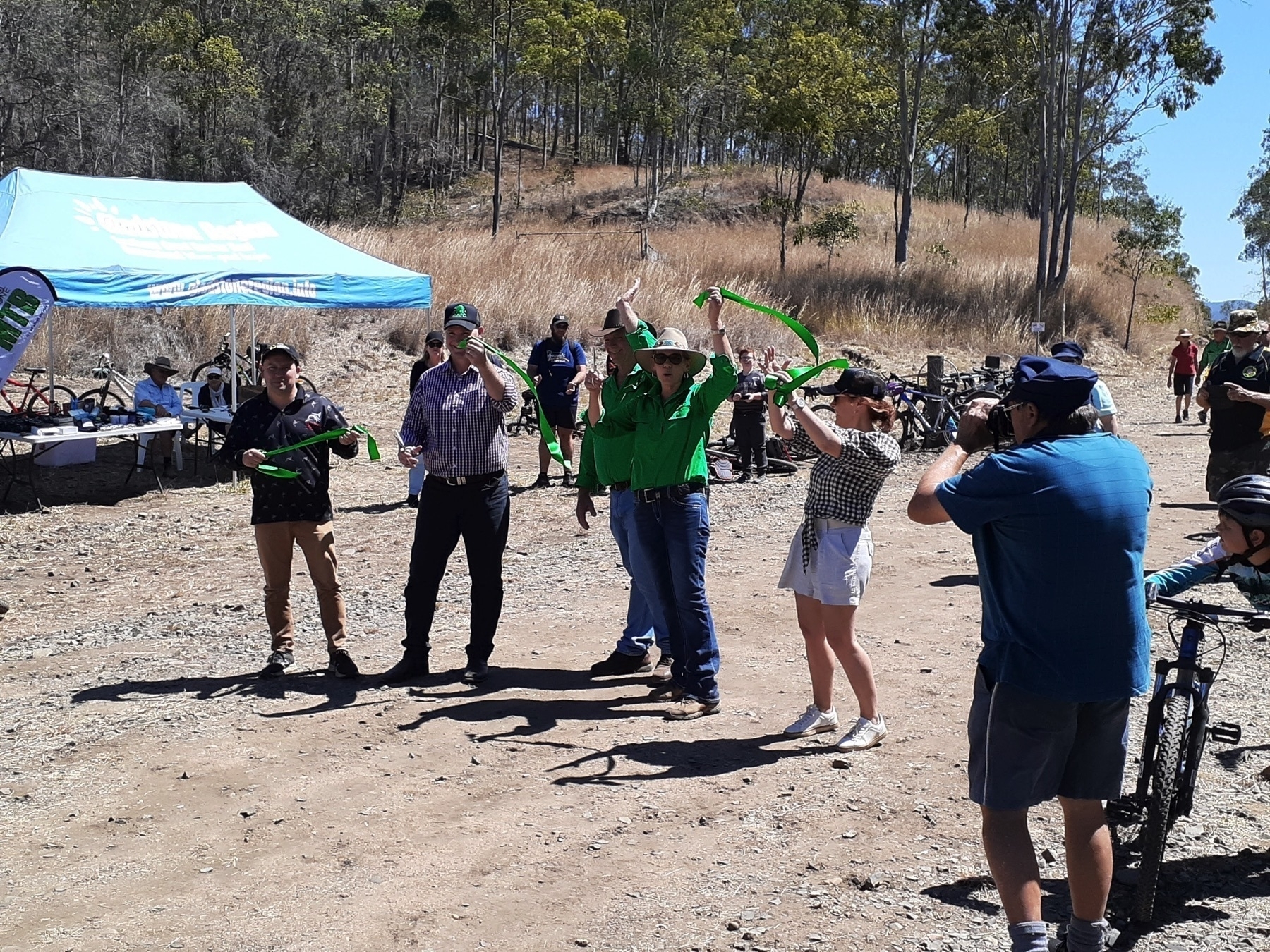
Today’s bonus cycling content: me blathering on, terrifically earnest, about a bikeway or somesuch. Oh, and the acting Premier Andrew Fraser, and BCC councillor Julian Simmonds have a go too. But you’re clicking to see me, right?


How long till my soul gets it right?

Almost everyone I know pays me out for liking the Indigo Girls. That’s OK, because of course I am undeterred. In a self-induced bad mood yesterday afternoon/evening, it was Emily Saliers who lifted me out of it, and launched me instead into a tiny bit of retro-reflectivity.

By which I mean looking back at 2011. Although the word’s correct meaning is useful in cycling terms as well.

So where has briztreadley.com taken me this year? Has it been just another year, history repeating itself, same-old, same-old? Or has this blog been reincarnated, as Emily would prefer?

Well, both off-road and on-road there’s been a bit of a surge in the frequency and quantity of posts. I can’t judge the quality myself.

I’ve posted 92 times in 2011, about once every four days. And it seems that I’m still slightly more of a roadie than a mountain-biker. Roadie was the top category, with 34 posts, compared to 24 for mountain biking. Cyclocross makes a bit of a surge, with 12 posts. C’mon ‘cross! Hoping for even more growth in that category next year.

My favourite category for posts (OK, its actually the default): Whatever. Dude.

Mid-year, briztreadley took a strange turn, when there was a burst of posts about womens AFL. I can’t explain everything that happens. This is the best I can do.

How good is this: Super Mario power-ups painted on the bikeway. Nice work, nerd graffitist.

But at the end of the year, I’m pretty happy with what I’ve posted here, and how it looks, and the conversations it has helped start. It’s a blog about people (friends, really) and cycling.

So, dearest reader, my earnest wish for you is that you have a little bit of time to yourself over Christmas.

And that in the other times, that you get out on your treadley, day-time or night-time, on-road or off-road. And I hope you give me a call before you head out, cos I would love to ride with you. See you at the trailhead/meeting place.

And a final Indigo Girls bonus for today. See if you can listen to this without smiling. I can’t.

Getting back on the horse

First “proper” mtb ride this morning since I got thrown.

And it was a good one to be at. The annual post-ride BBQ at Max’s Christmas Daisy Hill Wednesday morning crew event ride thing.

Above is the morning’s crew (from left): Becca, Jody, Max, Michael, Gordo, Sparky, Gaz, Geoff, Neil, Floody, and a dude whose name I don’t know (sorry!).

At breakfast but not on the ride were Dean0 and Aaron (Jaman).

Missing from the regulars are Flyboy Dave, Chris, Rich and no doubt others who I will kick myself for forgetting. (expect this sentence to be updated!)

Flyboy had a post on his blog recently about what he sees as a resurgence in the one-off big rides organised by forum members on MTB Dirt. It’s a good thing, and part of what makes the mtb community quite a lot of fun, I find.

I am very thankful that early on in my mtb riding ‘career’ that I found the Wednesday morning crew. It has always had riders faster than me, which is good becos you can measure yourself against them. It has always had a friendly & welcoming vibe … anyone can join in any week.

And it has always had a solid core of riders who are looking to improve. Whether that means getting faster or mastering more technical trails, or whatever it means for different people.

So although I have got towards the end of a year in which my performances in races and other big rides has fallen away a bit, I’m not at all disheartened. I think I have improved in skills and knowledge quite a lot this year. And there’s always another ride coming up, another challenge to prepare for. G2I. LunarC. Bring it on.