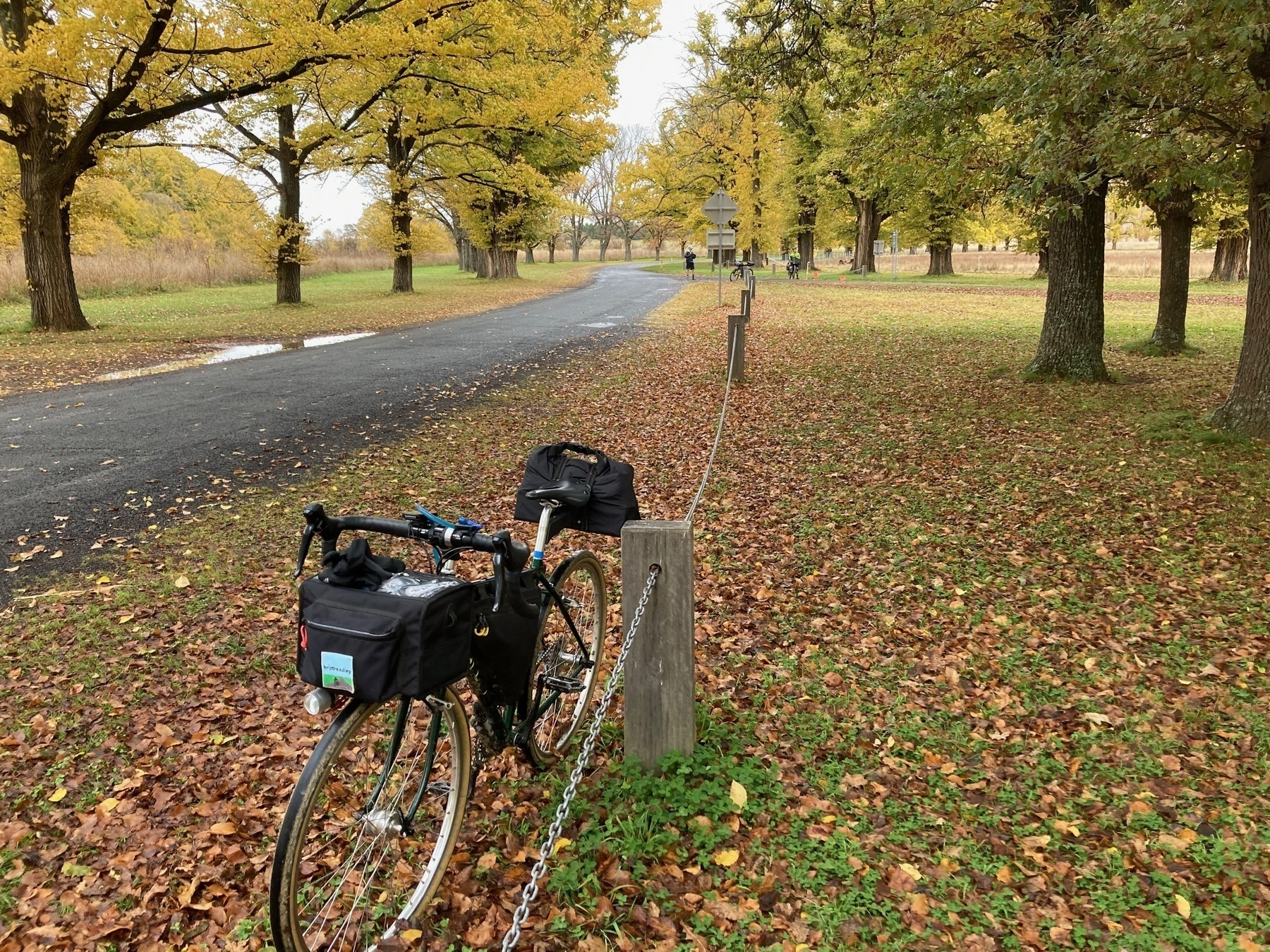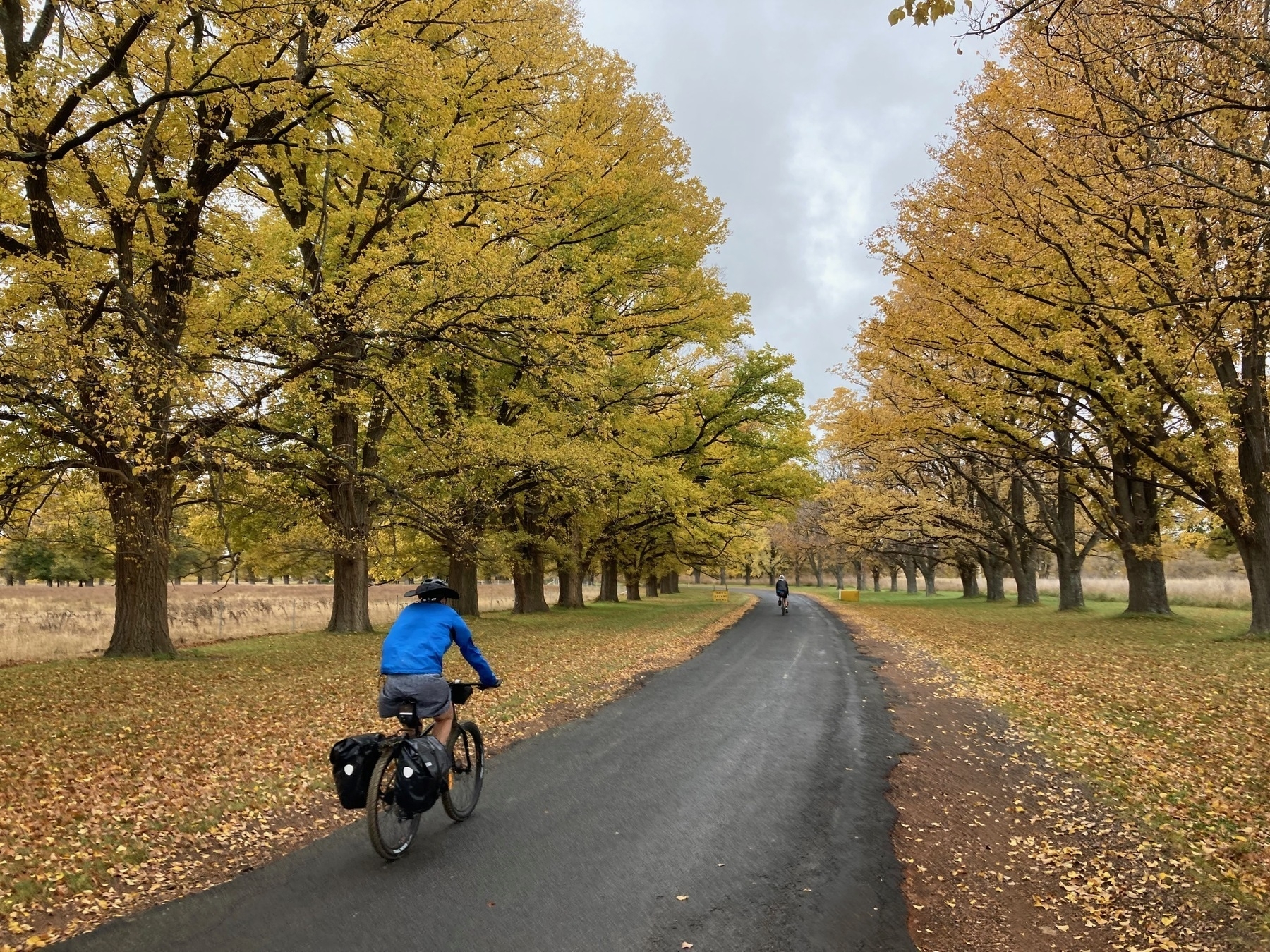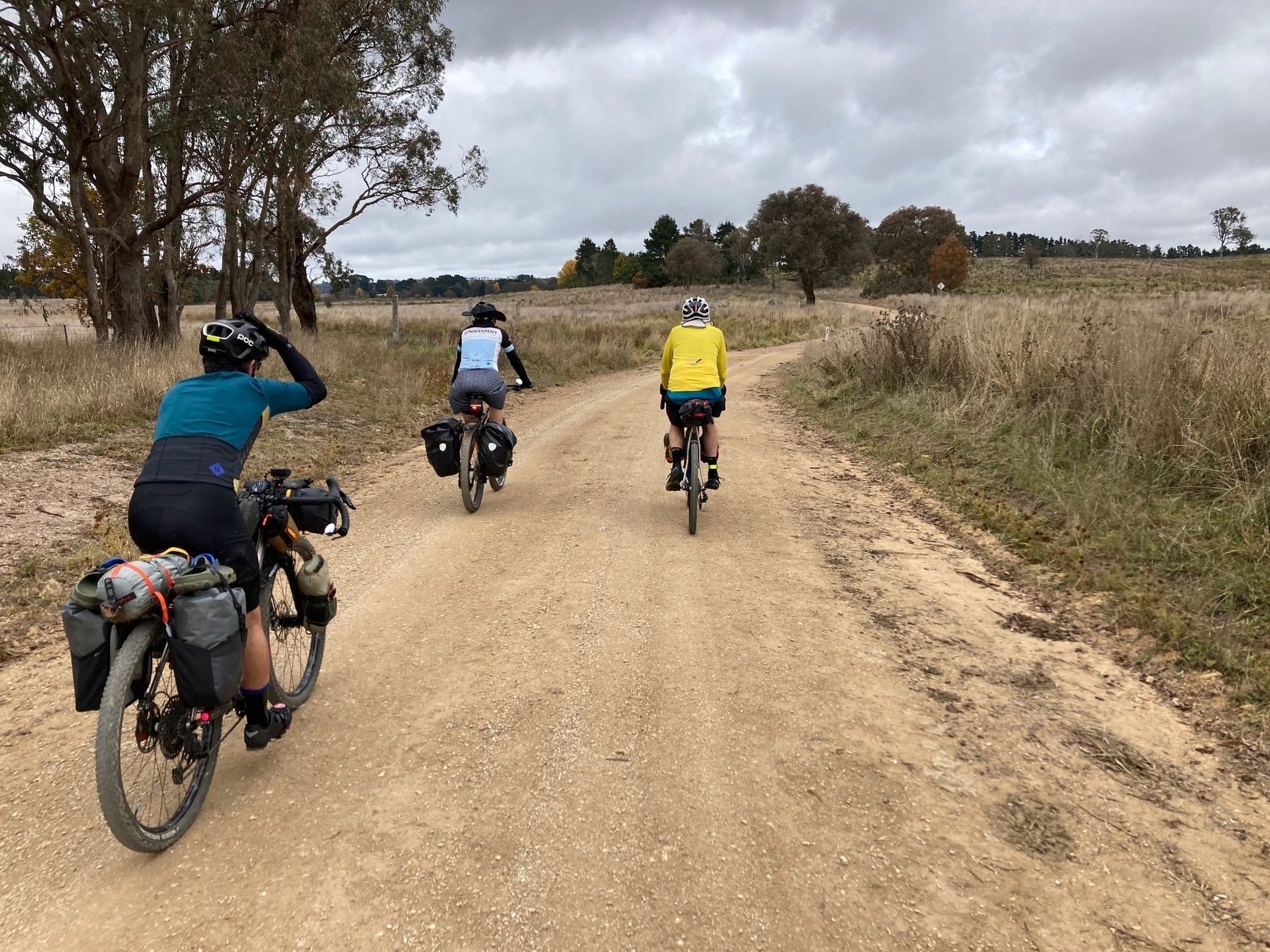
Can I just post this here cos
- It’s awesome
- I want to remember it often
- I agree with every single line in it.
Can I just post this here cos
A little while ago on this very website, I answered the question that everybody wants to know: “How many bikes do I need?”
I’ve just added a new bike to my shed, so I thought it might be fun to look at the principle stated in that earlier article and see how it applies to the bikes I currently own.
Controversially, my thesis discards N+1 as a guide for working out how many bikes you need, and replaces it with the idea that the right number of bikes is one.
So if you want to go road riding, you need one bike, a road bike.
If you want go mountain biking, you need one bike, a mountain bike.
If you want to race cyclocross / go touring or bikepacking / travel with a bike, you get the point.
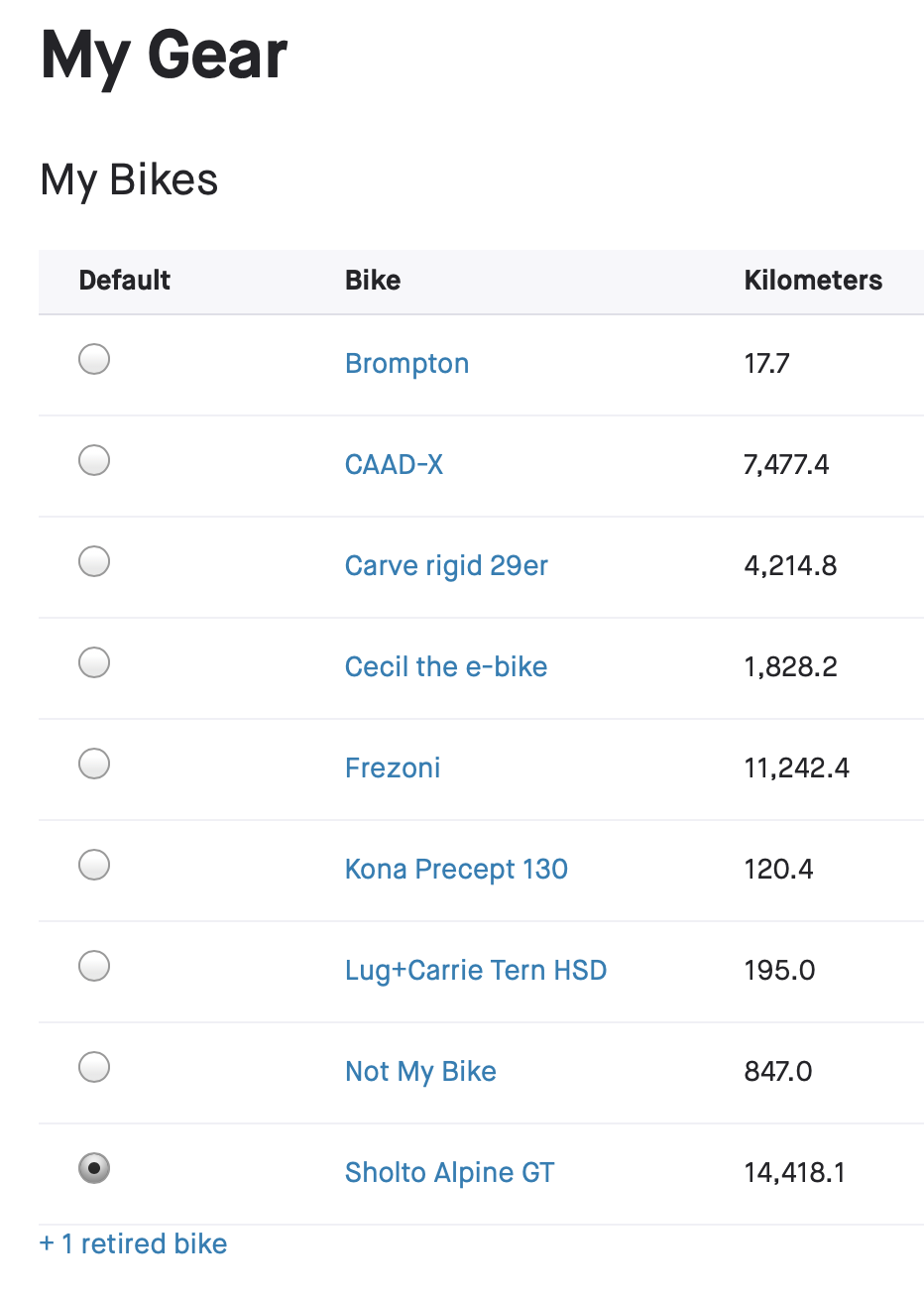
At the moment, the number of one bikes I have is seven.
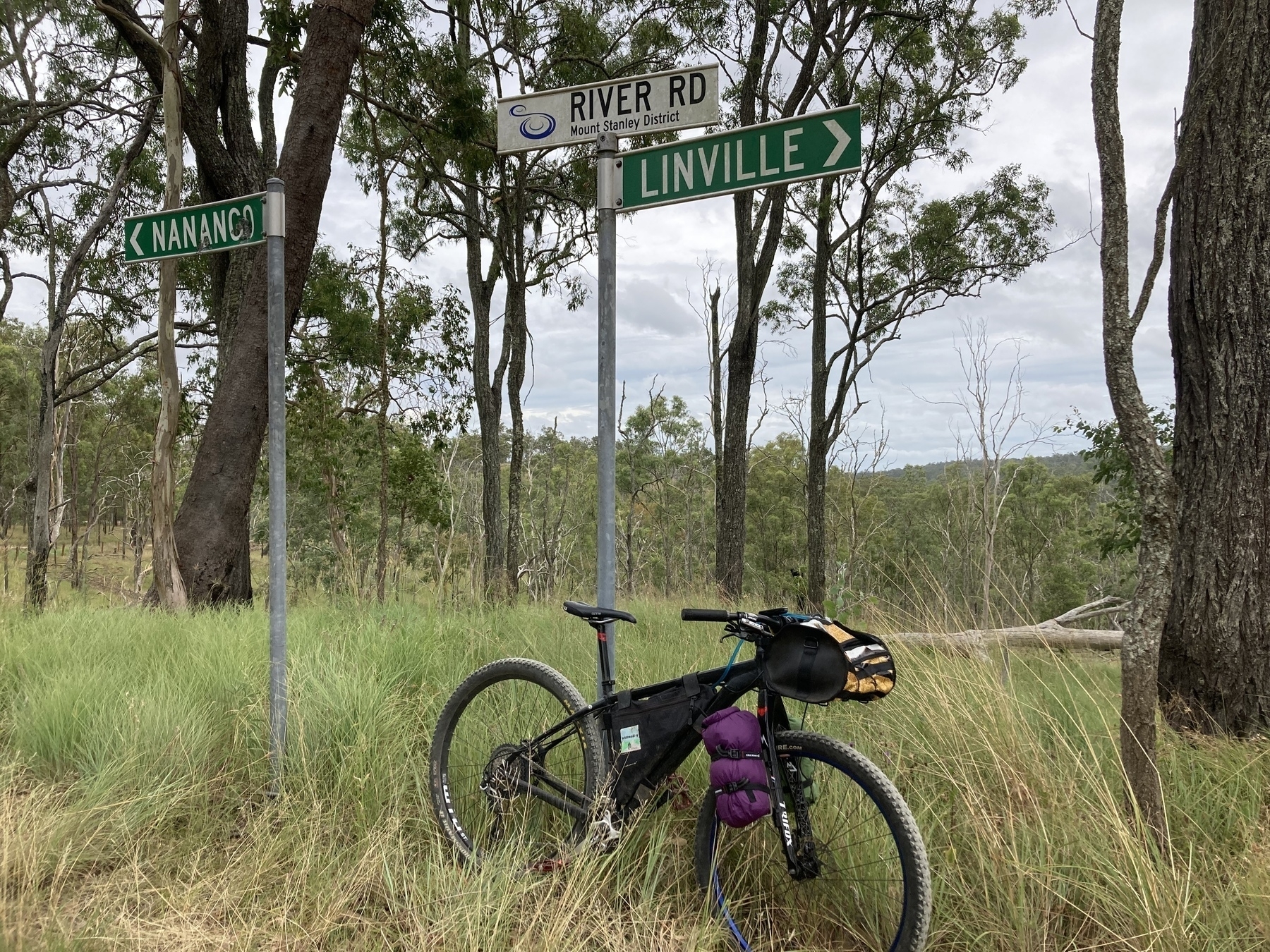
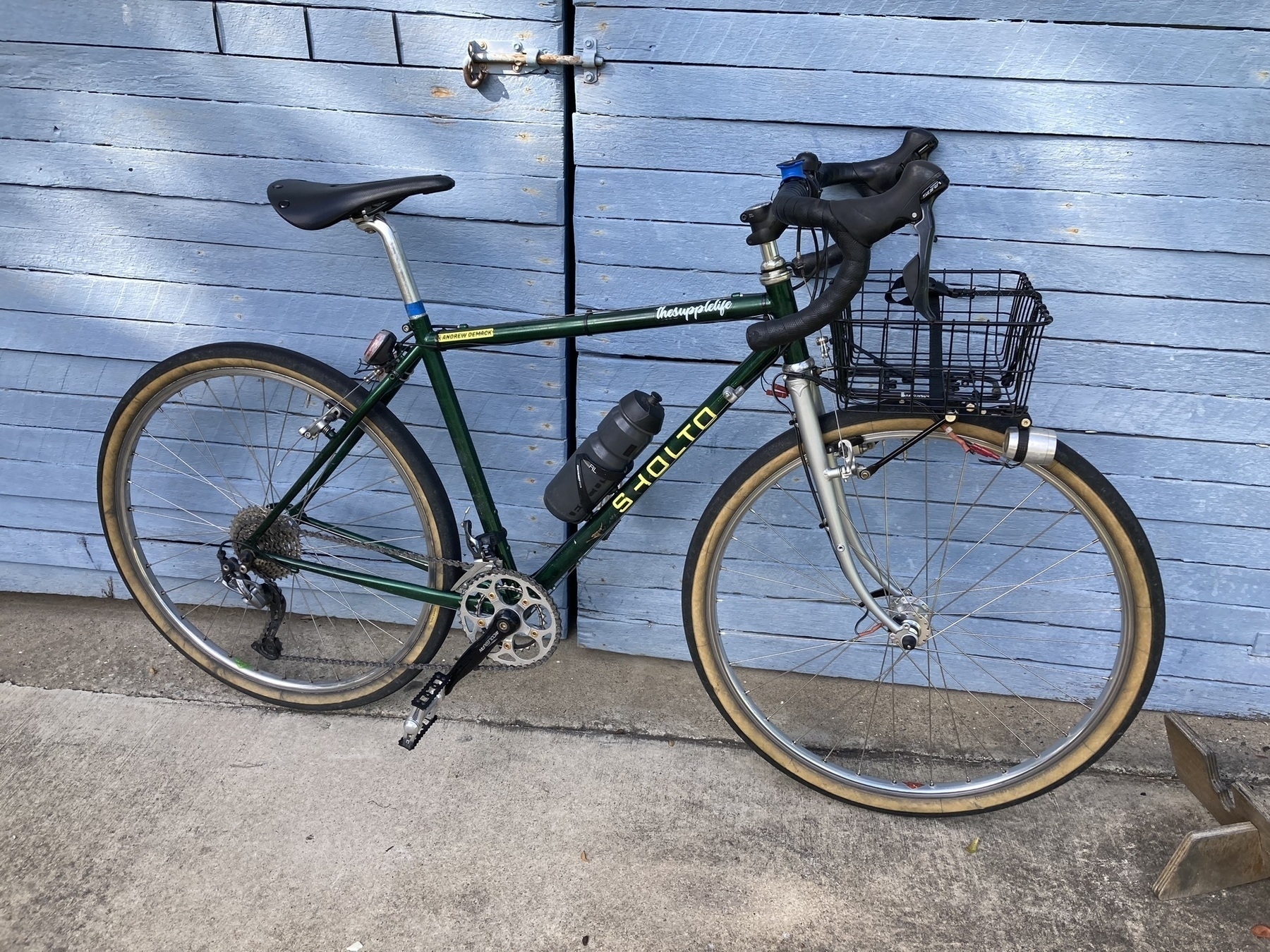
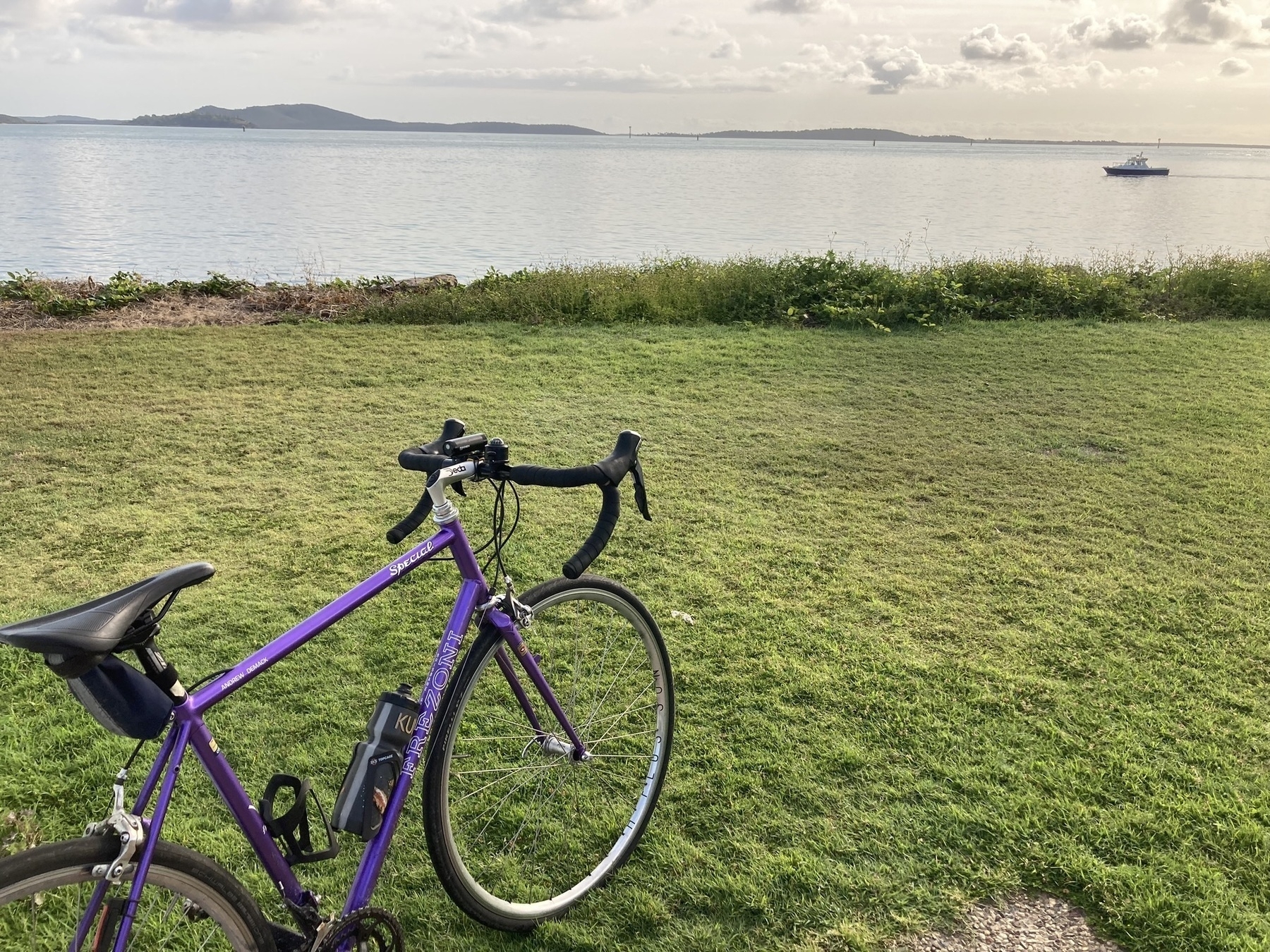
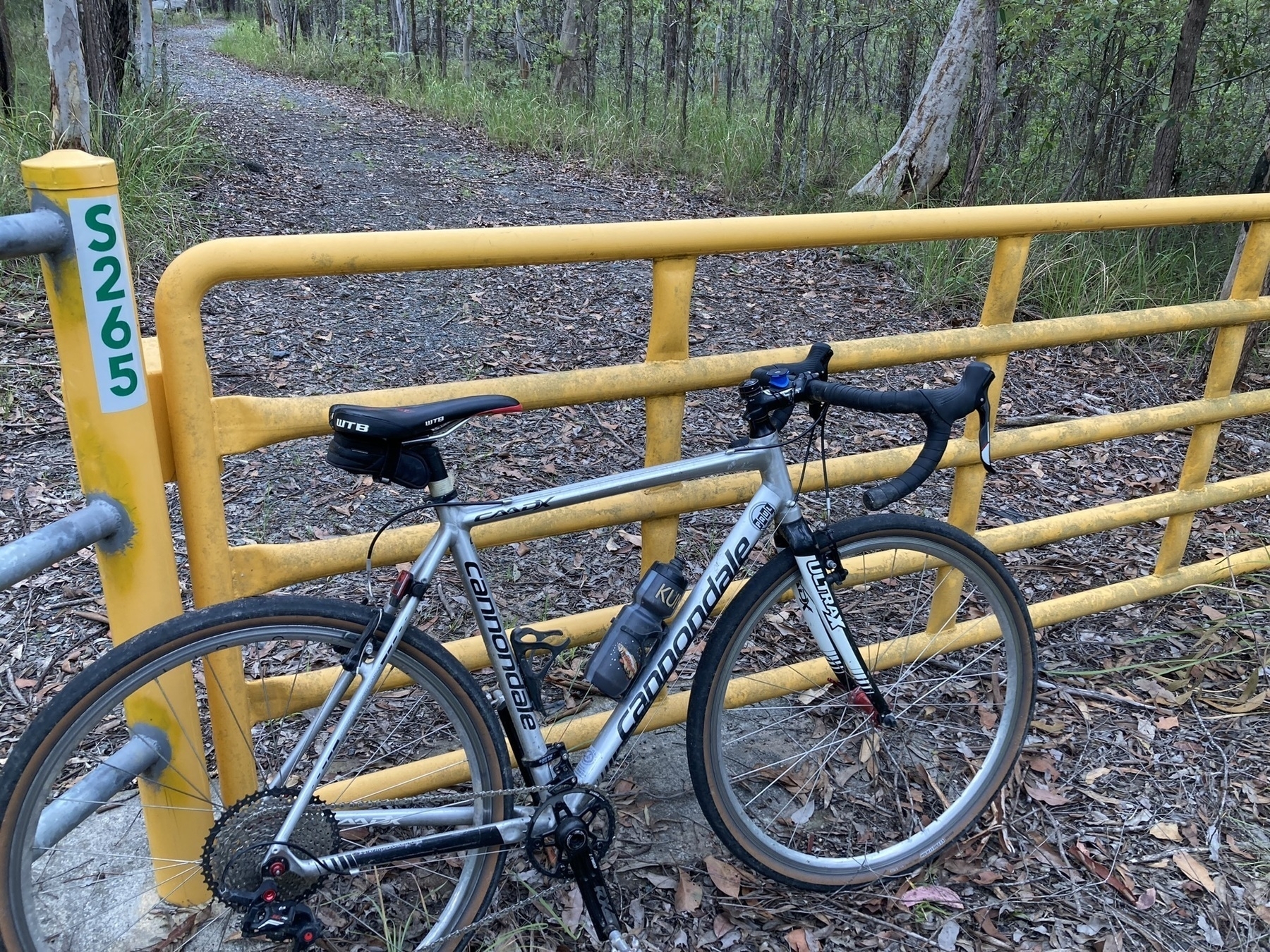
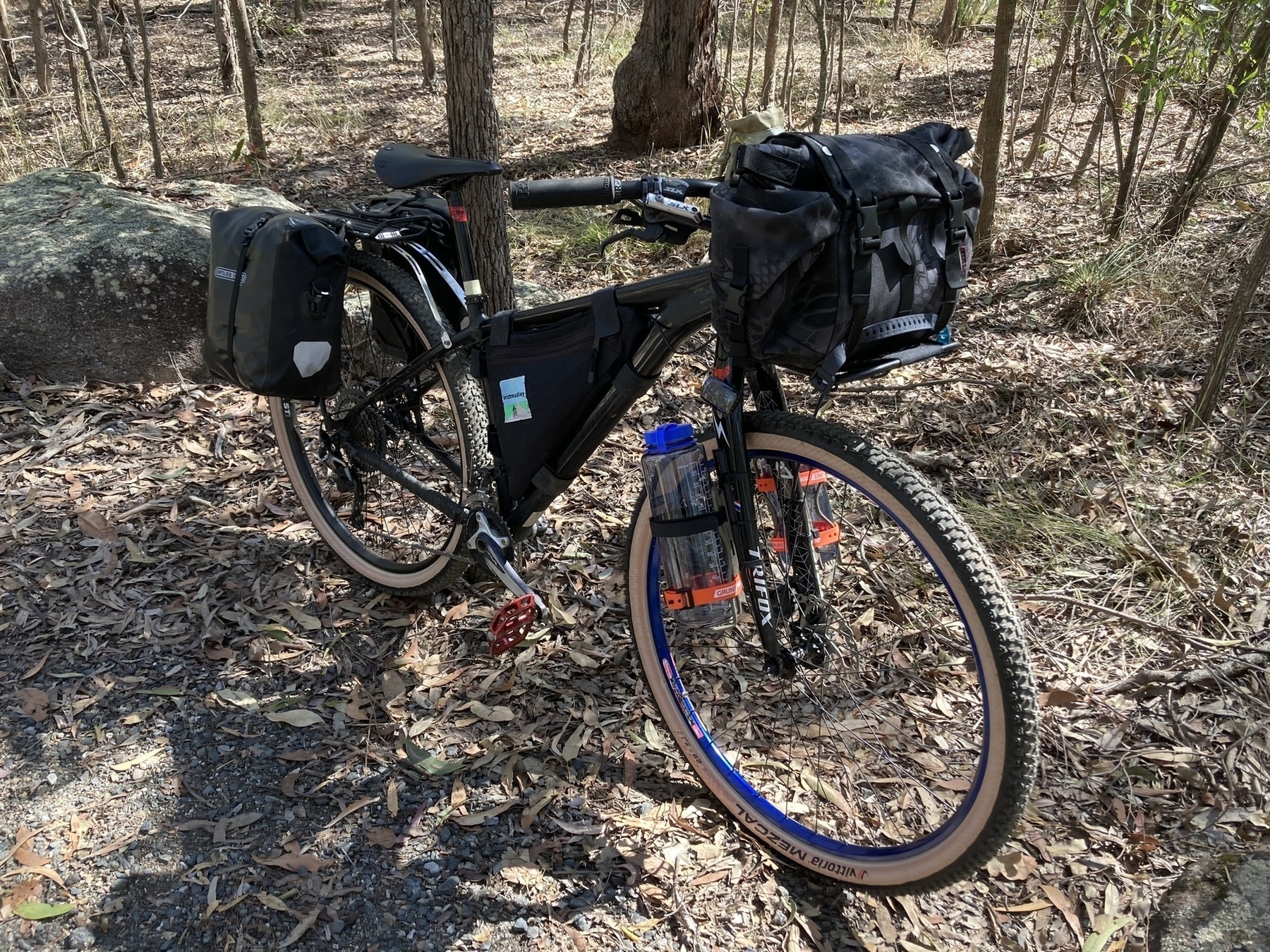
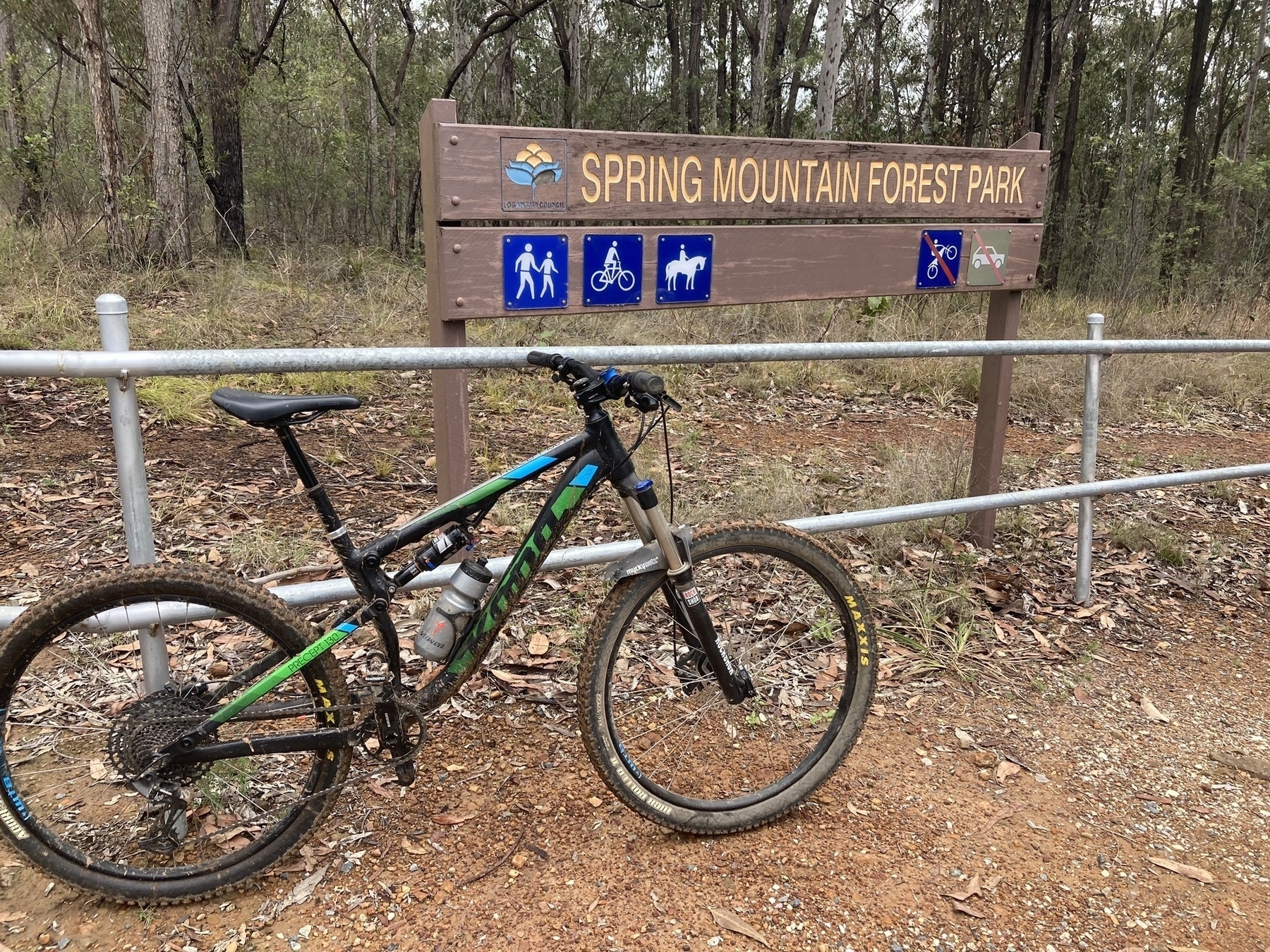
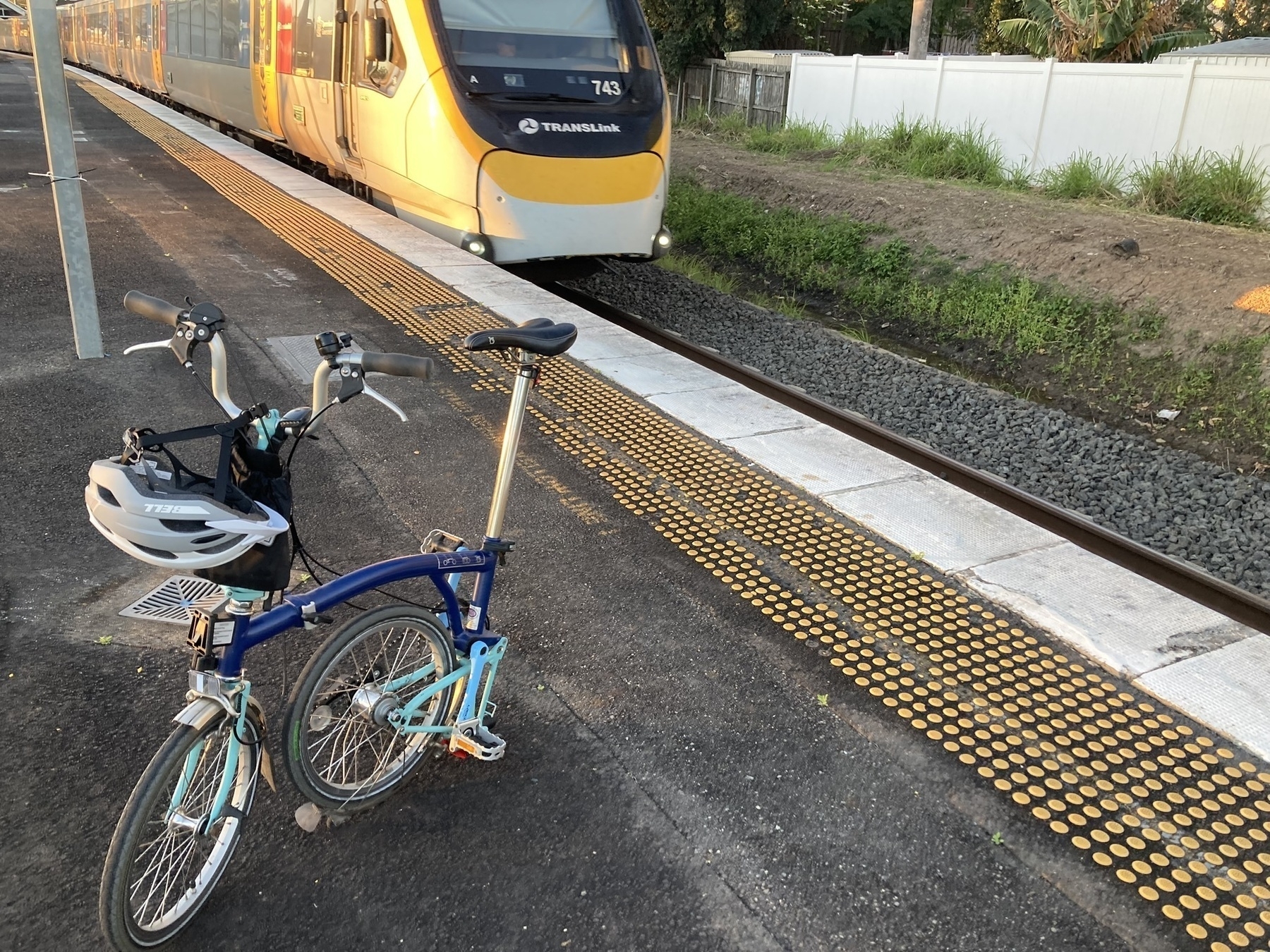
A road bike, a cyclocross bike, a dual-suspension mountain bike, a touring/commuting bike, a bikepacking bike, a folding bike, and an e-bike for shopping and commuting.
And the reason that this method holds up to the vicissitudes of life is that even though I have bikes for specific purposes, each of those bikes are actually quite versatile, and can easily fill the roles adjacent to their purpose.
So here we go. A complete rundown of the Briztreadley stable of bicycles, where they came from, and how long I have owned them, and what each one means to me.
I’m going to do this as a series of posts, probably over a few weeks. I probably won’t “announce” it until its all finished.
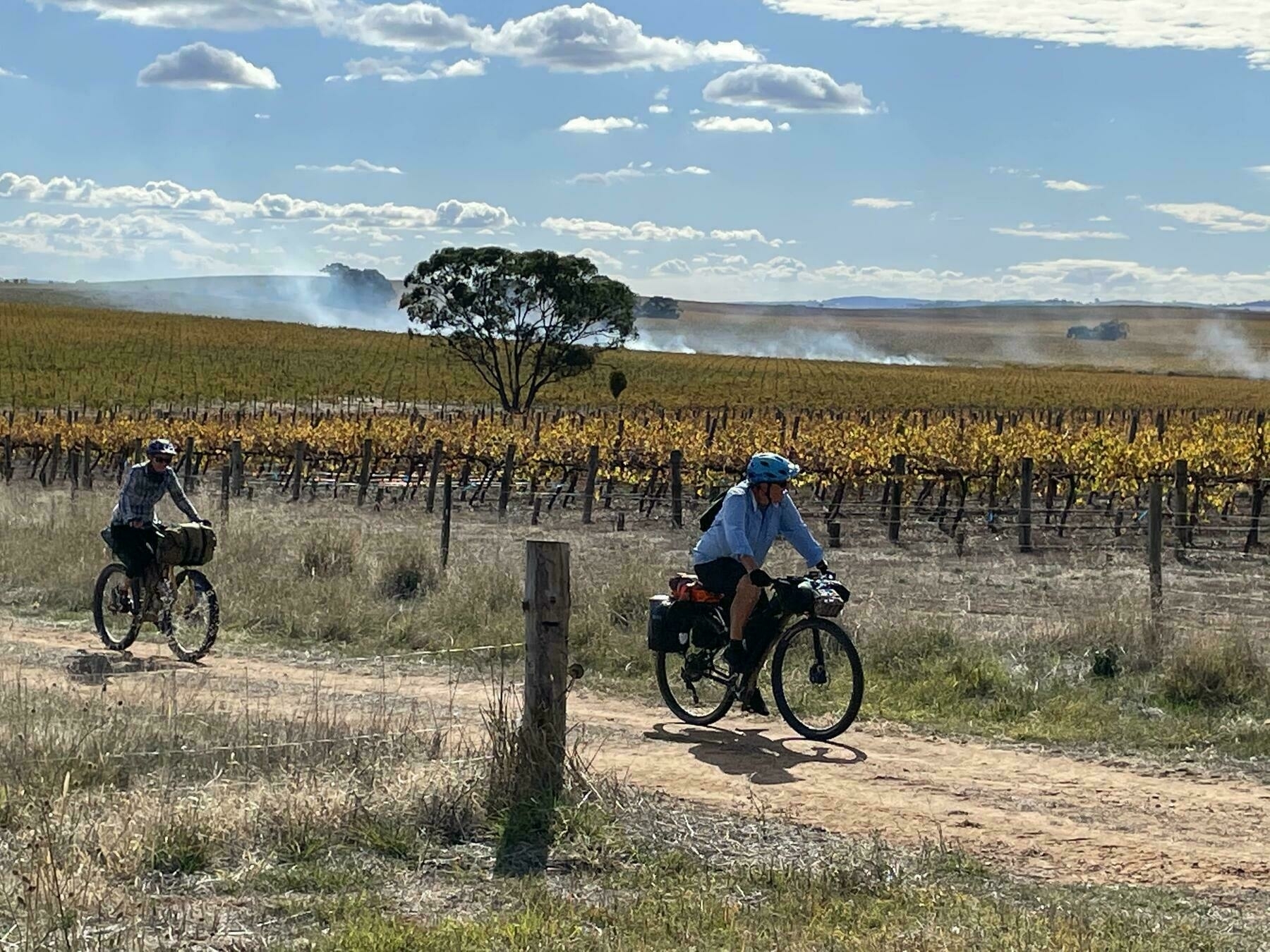
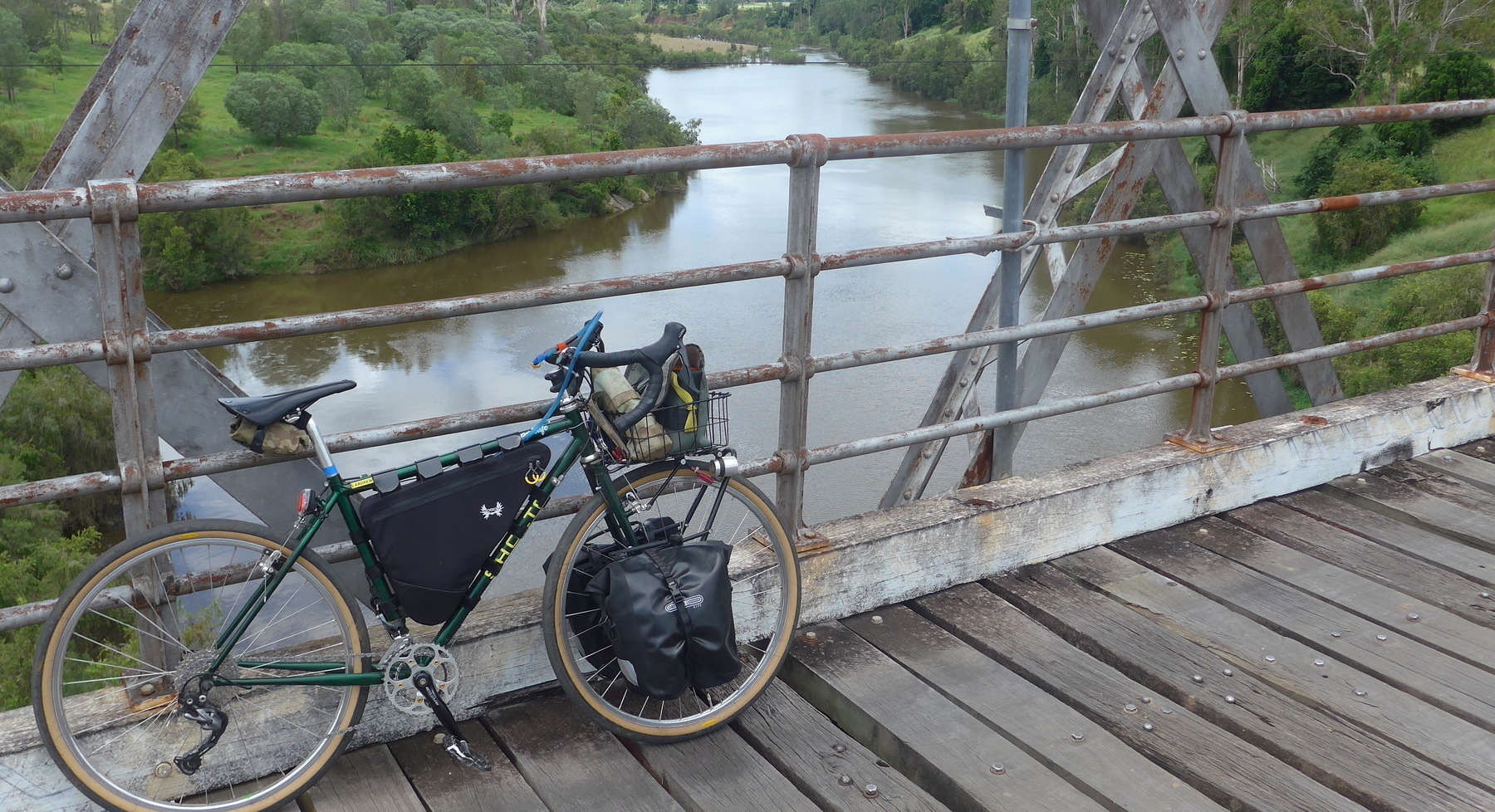
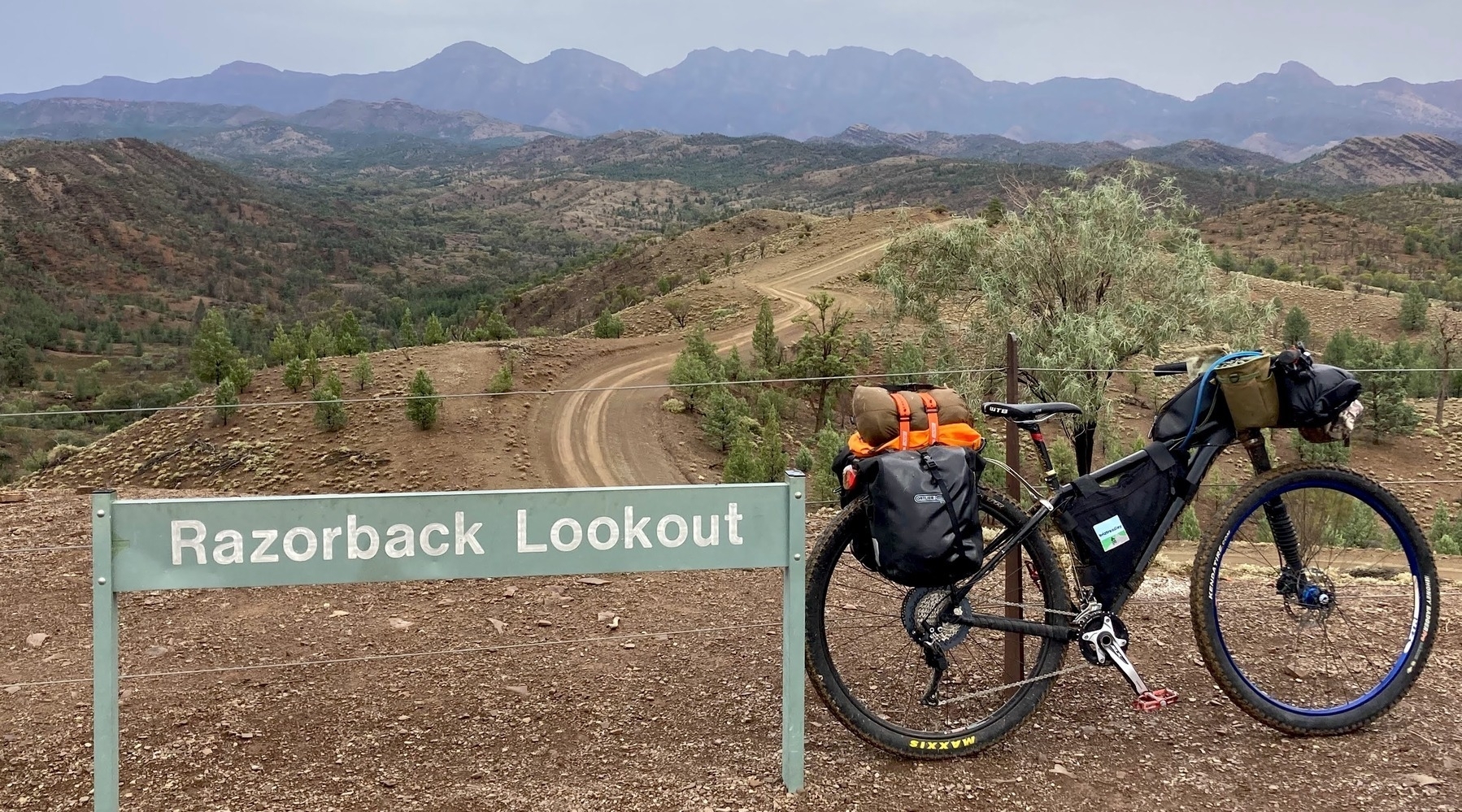
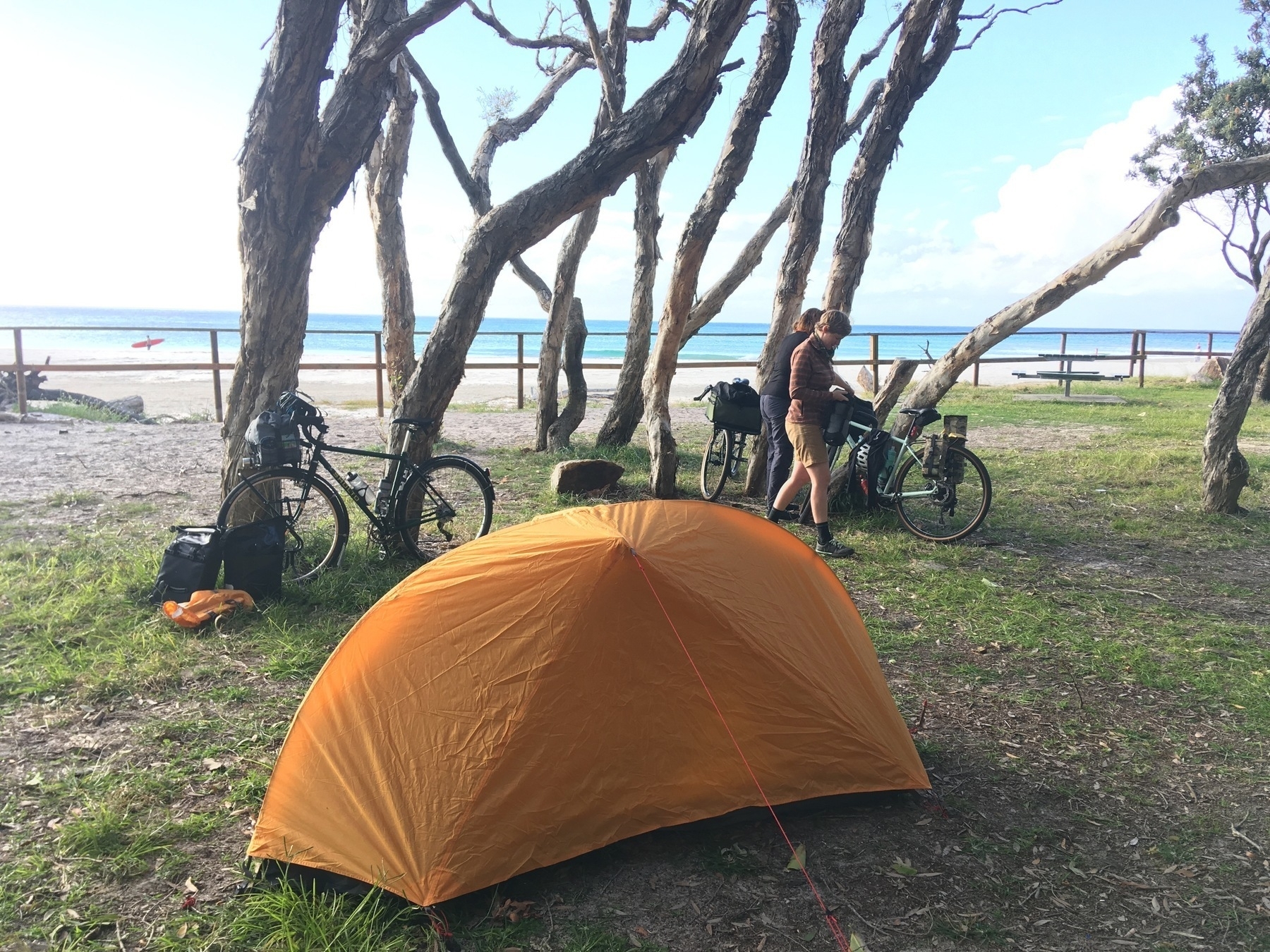
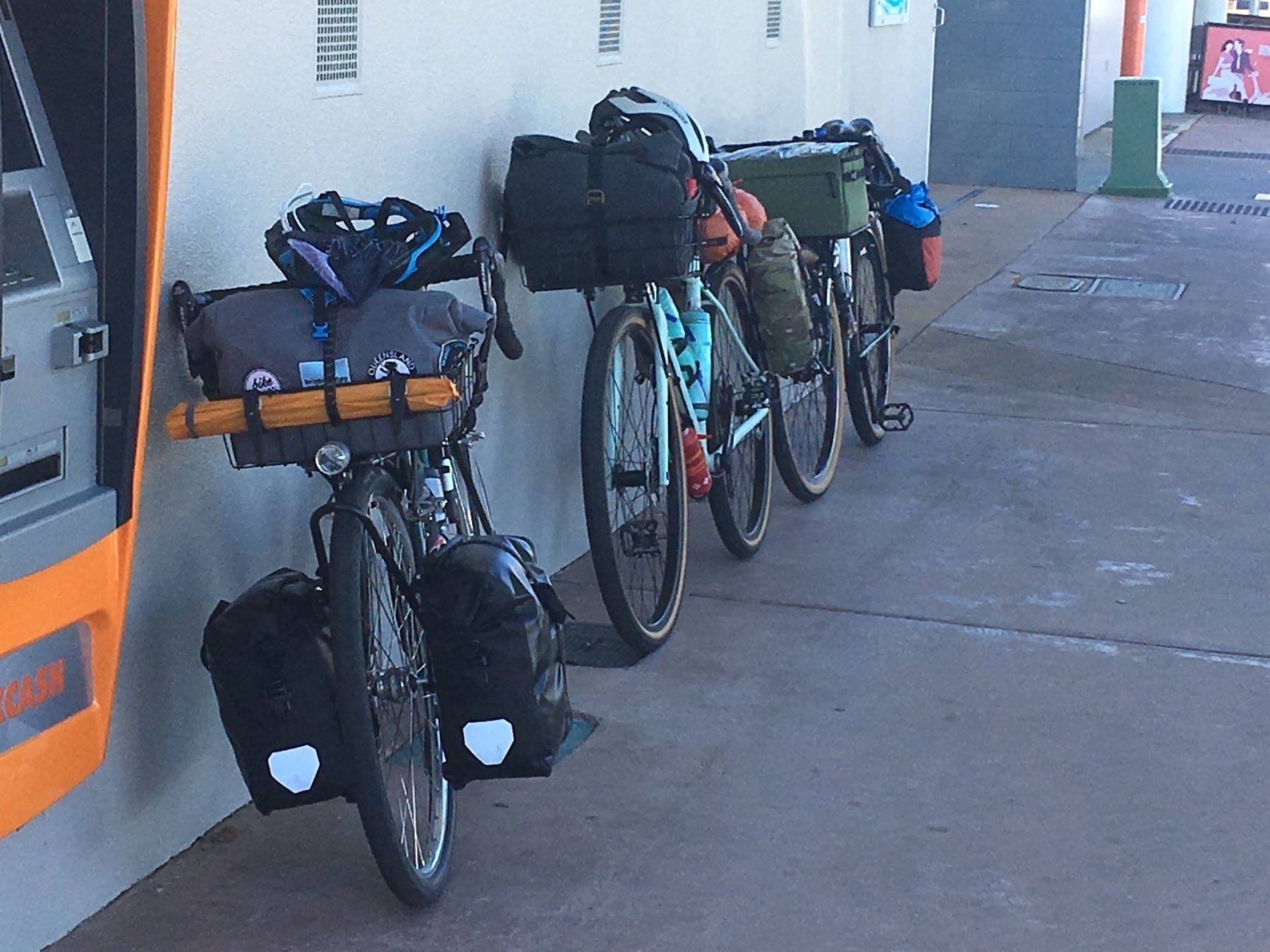
Fiona on a steel bike, me on an aluminium bike. Loaded up and trucking and having the time of our lives.
I read plenty of stuff about bikes, both online and in magazines. Have done so for decades.
And one thing that I read often (so often!) in discussions and comparisons of bikes is that there is a discernable difference between bikes based on the material the frame is made from.
And this mostly is expressed as a diss for aluminium as a frame material.
Australian Geographic has just released a ‘guide to bikepacking’, which says the following, inter alia: " Aluminium is light, and it is cheap, but you will cop a jarring ride".
Can I get some science to go with this unsubstantiated opinion?
Specifically some science that shows that in a system which includes pneumatic tyres with up to 10 mm of “give” that a rider can tell the difference between the so-called “ride quality” of a metal (steel, titanium or aluminium) or carbon fibre frame.
I currently own six bikes. There is a road bike (Frezoni custom steel), a cyclocross bike (Cannondale CAAD-X), a touring bike (Shogun Alpine GT), a hardtail mountain bike (Specialized Carve), a folding bike (Brompton), and a commuter e-bike (built it myself, but the frame is a old Cecil Walker steel touring frame).
Four of my bikes have steel frames, and two have aluminium frames. In the past I have also owned titanium and carbon fibre framed bikes.
Here are some things which make a difference to how a bike rides:
Here are the things which have no discernable effect on how a bike rides:
My favourite and most memorable rides are multi-day touring rides, hopefully somewhere scenic and interesting. And from the list above, I will take either the hardtail mountain bike or the touring/commuting bike for those multi-day rides.
One is steel, the supposed gold standard for “ride quality”. The other is aluminium, which Australian Geographic thinks is “jarring”.
I take the hardtail aluminium mountain bike if I think the route will be rough or gnarly.
And the reason is simple: the mtb has bigger tyres. About 55-60 mm wide, compared with 48 mm wide for the biggest tyre which fits the touring bike.
That is all there is to it. The steel touring bike, which is my favourite machine, which I have ridden 14,000 km on in the last four years (since I started using Strava), isn’t the right bike for rougher roads. The bike with the big tyres is.
So why am I so hot under the collar about this issue?
I dislike poor advice, and advice which focusses on the wrong things.
There are plenty of aspects of bike design and construction which are important differentiators that you can look at when buying a bike, and I’ve listed some of them above. Price might also be a factor for most of us, also longevity.
Those authors who push the idea that aluminium has a harsh ride in comparison to steel or titanium might be actually be doing bike buyers a favour.
If an aluminium-framed bike is cheaper and lighter than a steel one (and surely much cheaper than carbon-fibre or titanium), then just buy it. The ride quality you experience will be based on how the total bike fits you, and how the tyres you select work on the road/trail surfaces you ride on.
What won’t be a factor in ride quality? The aluminium. Cos physics.
Don’t believe me? Reckon you can tell the difference between bikes purely on frame material? Email andrew.demack@gmail.com and let’s set up a test.
See also:
Straddie, a.k.a Minjerribah is a great place to dip your toes into the water, both figuratively in terms of bike touring and literally because it’s an island paradise right on Brisbane’s doorstep.
The Stradbroke Flyer is the only way to get there. It departs at five to the hour every hour in the morning, and more random times in the afternoon. But of course you’re going in the morning, you want to maximise your time on the island.
I tend to just drive down to Cleveland and park relatively close to Toondah Harbour. Because I’m bringing a bike, if the area around the harbour is parked out, it’s easy enough to find a spot a little further away.
The boat ride is about 25 minutes, and I’m not great on boats but I’ve never felt sick on the Flyer. The next thing you know you’re disembarking at One Mile Jetty, Dunwich.
There are food outlets at Dunwich if you need a coffee before you start riding.
The number one thing about having a great bike-touring weekend on Straddie is your route from Dunwich across the island to Point Lookout.
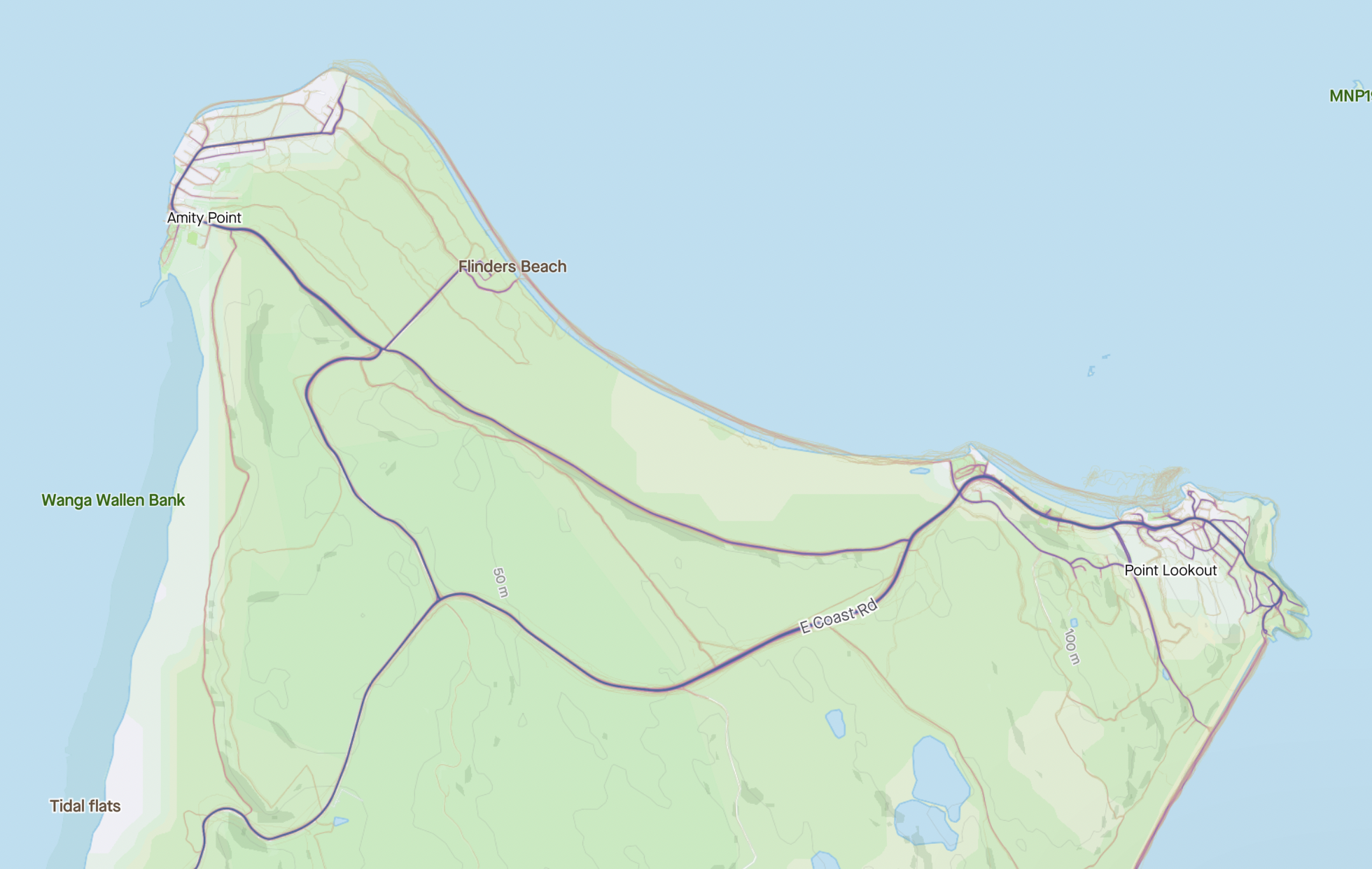
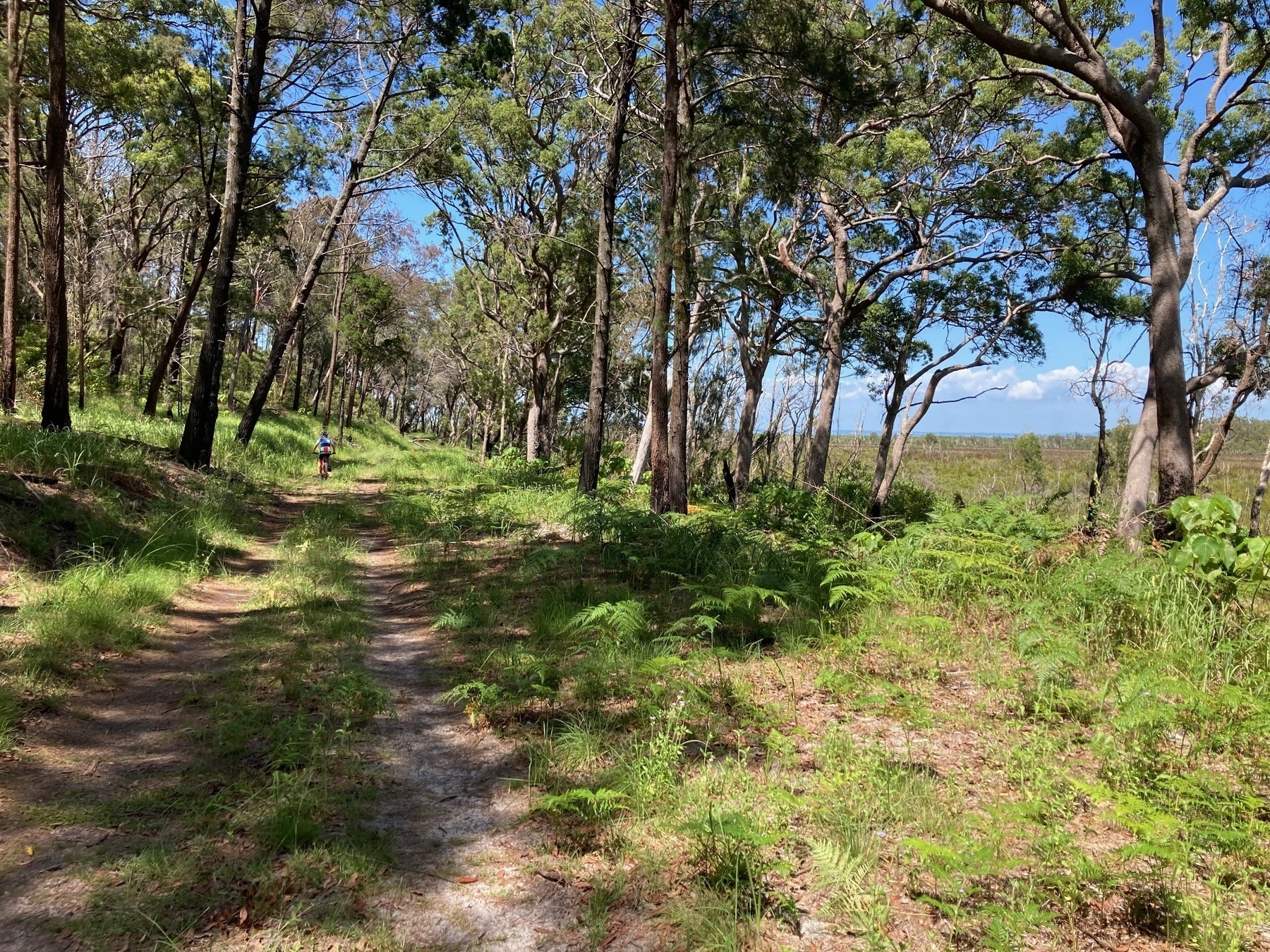
Below is my current route, which is perfectly fine on a mountain bike, or any bike with tyres bigger than 50mm/ 2inches. There are sandy patches after you leave East Coast Rd, but the hardest part really is the first 7.5km from Dunwich on the bitumen to the turnoff at “The Esses”, because it’s the section with the traffic. I rode this route for the first time in January this year, but Strava heat maps tell me that plenty of people have ridden this way before. I’m hopeful that we can get this route signed and formalised over the next couple of years, but crucially there is absolutely no reason not to use this route right now.
It follows a sandy, gravel track from East Coast Rd almost all the way to Amity. It is closed to motorised traffic. And then after a short spell on the bitumen (either Claytons Road or Beehive Rd, not sure which), you once again get into the bush for the roll along Point Lookout Rd, which is closed to cars.
And now you know everything that is important is to know about how to bike tour on Straddie. The rest of it you can find out by being there. Grab a campsite at one of the Minjerribah camping grounds. I like Adder Rock, but Cylinder Beach is also popular. Hot tip is to ring up to book (07) 3409 9668, rather than using the website. Eat at the pub or get some fish and chips up at the point. I’m sure you will work it out.
P.S. I’m told there are more adventurous off-road rides you can do on Straddie. But this article is aimed at those who are new to bike touring.
P.P.S. You will notice there is nothing in this so-called beginners guide to bikepacking or bike touring that talks about what gear to bring or how to pack it on your bike. That’s because you can work out all of that AFTER you have been on your first bike tour. If you stay at the backpackers hostel (Manta Lodge) at Adder Rock then you could take all you need in a small backpack. My very strong advice is not to let a lack of gear stop you from getting out there.
In a few short weeks, sometime after EkkaCross, I’m going to go for a bike tour along the Mawson Trail. Yes, I am very much looking forward to it.
It’s a two-week tour on gravel roads and trails, and my friends and I will cover something just a little short of 1000km in those two weeks. From the Flinders Range through the South Australian outback to Barossa Valley vineyards, and finishing with a ride down from the Adelaide Hills into the South Australian capital.
The Mawson Trail is not your first bike tour. It helps to have some experience going into a two-week ride.
But for those people who see photos on Facebook or Instagram from my little adventures and wonder “could I do that?”, let me tell you that there’s nothing special about me, and I’m not any sort of athlete. I am a portly middle-aged man.
So, could you go bike touring? (or as the kids call it these days, “bikepacking”?)
Of course you could. The hardest part is deciding to go.
And here are some rides that I think are easy starter trips. You could do these rides with full camping kit, or just staying in pubs or motels.
Short tours around SEQ
Longer tours (which are still pretty easy)
Longer tours which are slightly harder
I shall put up a page describing each tour, so when the link goes live, there will be a description of each tour, including logistical challenges that need to be met, and a link to my Airtable database for each tour, with route plan and accommodation plan.
Hope you find this useful! Let me know if you go on any of these trips!
Ground-truthing a route from Kilkivan to Gundiah
I am hoping later this year to be able to ride from Ipswich to Hervey Bay on rail trails and minor roads. The first four days are roughly the same as the Great Queensland Rail Trail Adventure, except that day 4 would go all the way along the KKRT to Kilkivan.
The rest of the ride would be Gundiah or Tiaro, Maryborough, Hervey Bay (on the Mary to the Bay trail). So the route linked above provides a crucial section so make this possible: a low-traffic route heading east from Kilkivan.
The latest edition of Organised Grime’s guide to the BVRT and KKRT includes a map showing this link.
I rode the section from Cogzill Rd to Smith Rd on Tuesday 4 January. It was a useful link, but it certainly didn’t feel like a road reserve for most of it. It felt like a farm track, and I think I should have found out who the landowner was to let him know I was coming.
I’ve provided feedback to Mark Roberts, who makes the wonderful maps for the Organised Grime guides.
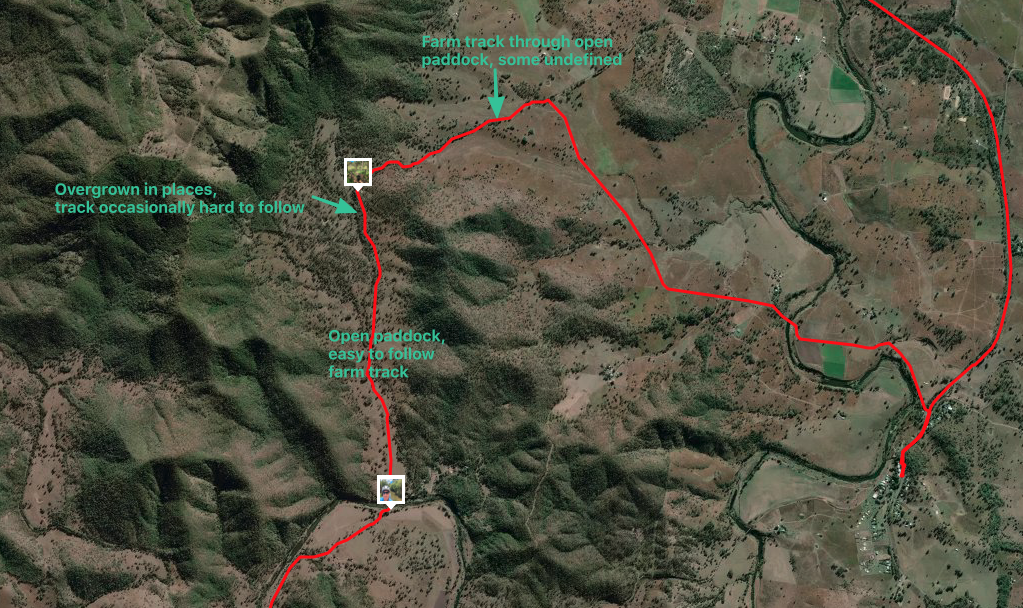
This screen grab shows the section of the route I’m discussing. It runs from 14.2 km to 19.1km on the Strava activity link at the top of this post.
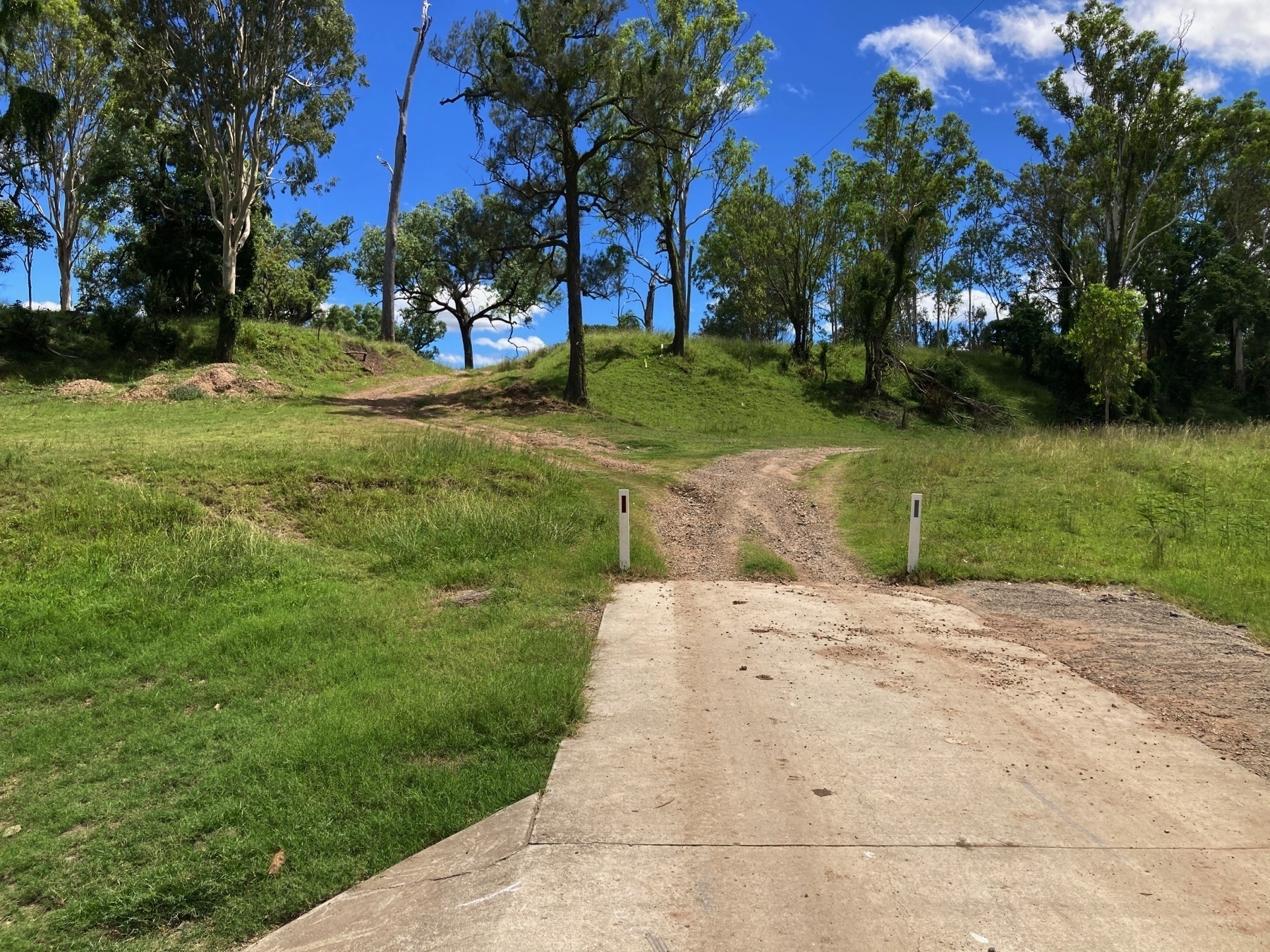
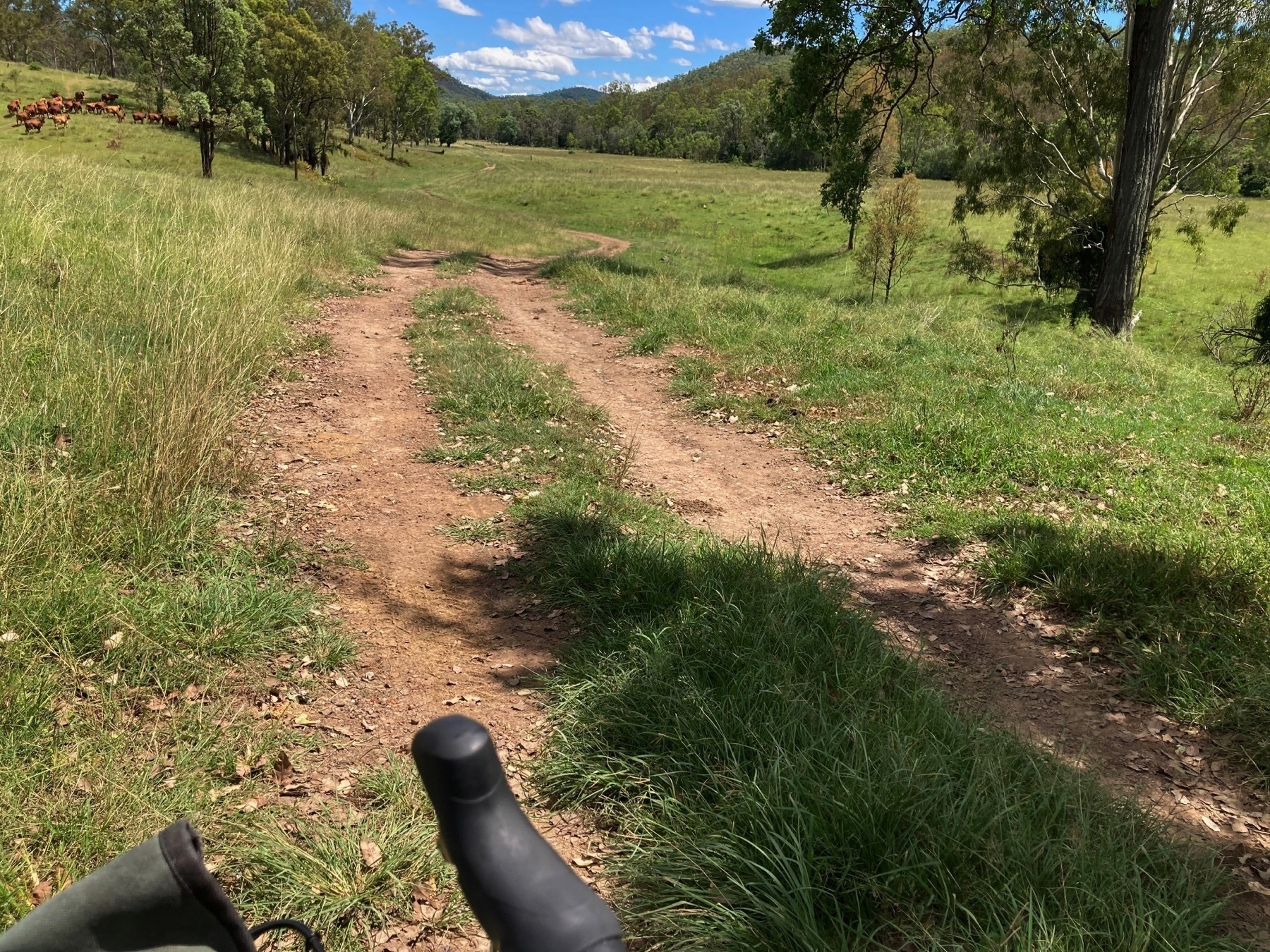
As we cross the Wide Bay Creek on Cogzell Rd, the “road” becomes a farm track and splits in two. The left hand branch is our route, the right is Cogzell Rd and I assume from looking at the aerial photos that it goes to a farm house.
As we leave the creek bed, we emerge into a valley paddock, with a well-defined double track trail.
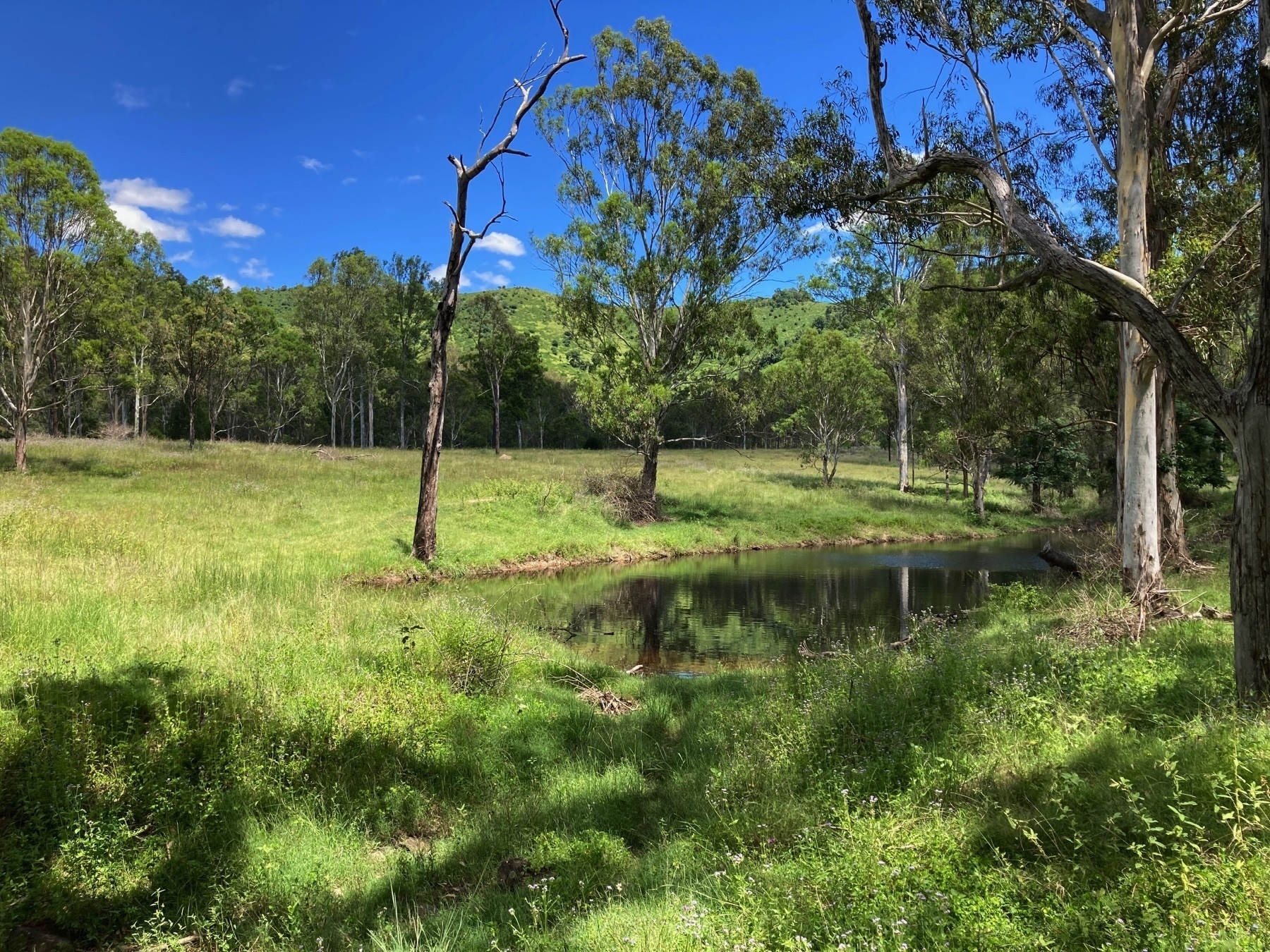
As the valley narrows in, the trail goes past a very nice little dam.
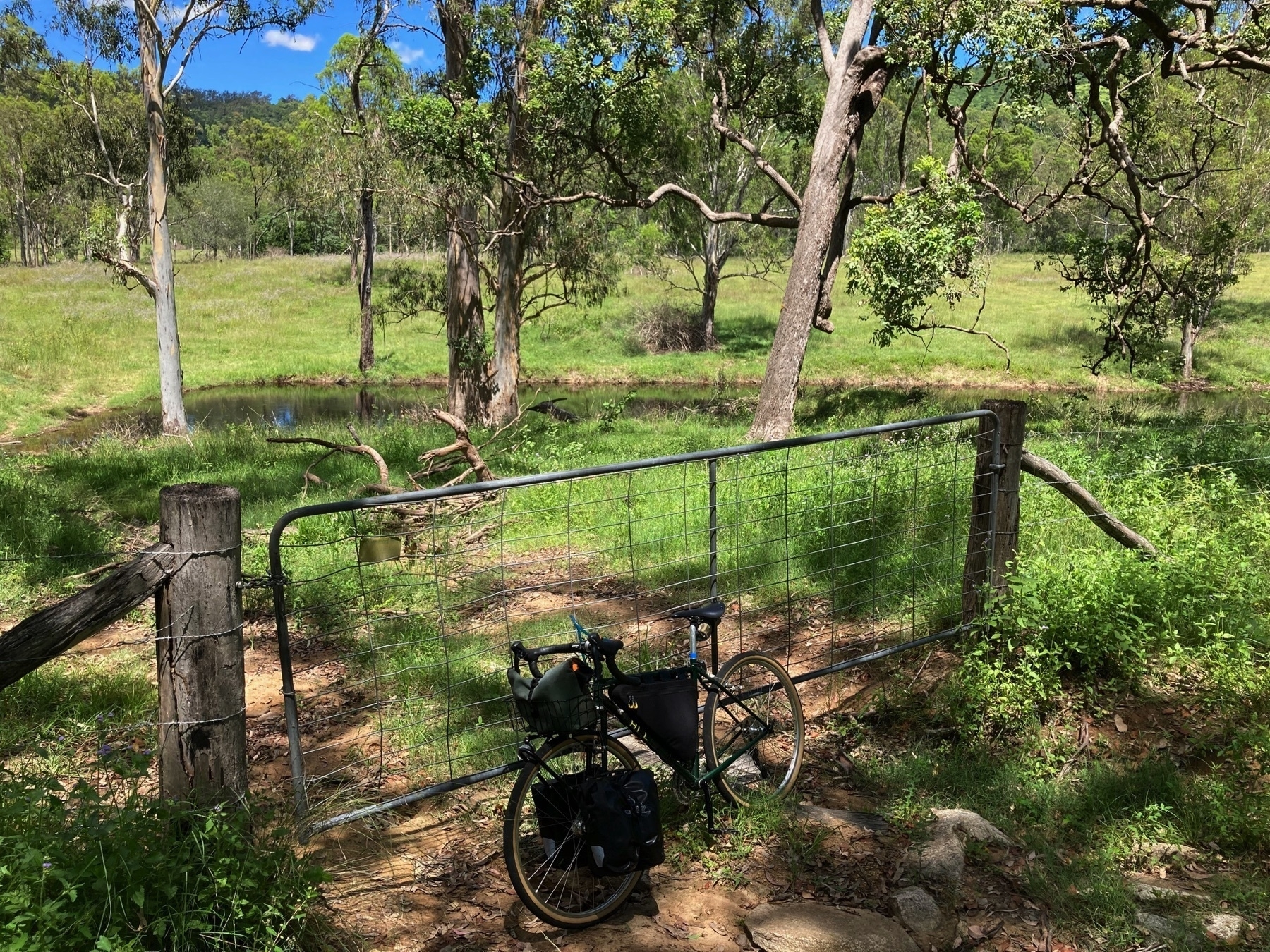
And through the first of maybe five gates.
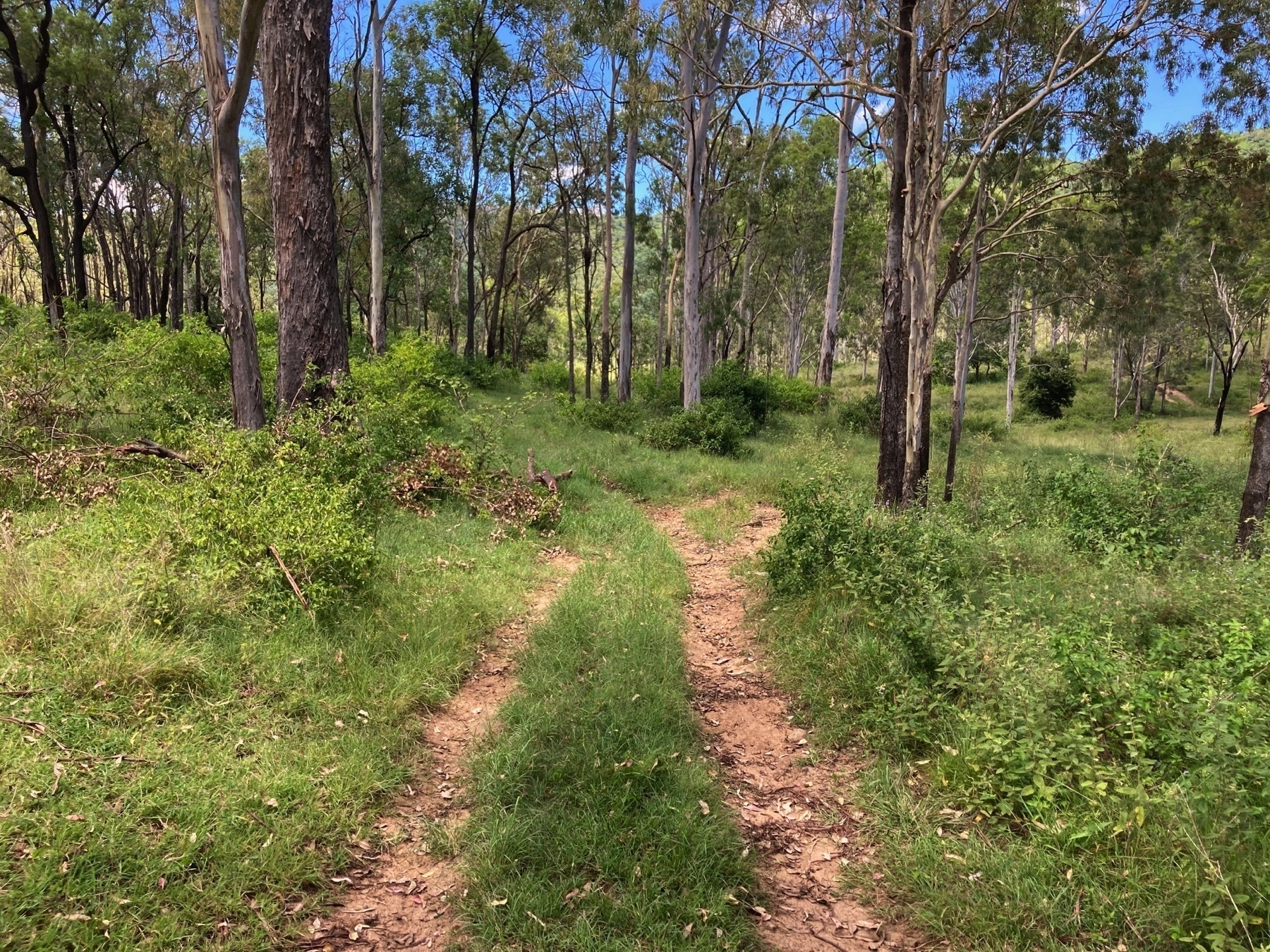
And then almost disappears on occasion as you follow the line on your GPS unit or phone.
The farm track emerges at the far end onto Smith Road, which takes us back towards Woolooga. Turn left on Gympie-Woolooga Rd to head towards Tiaro, or right to go to the cafe at Woolooga. Mark Roberts' route towards Gympie also goes right at this point, but from there on I haven’t ridden it.
I should point out that when I came back the next day after staying overnight at the Prince of Wales Hotel Gundiah, that I took the road, for comparison purposes. In cooler months the decisions will be less influenced by the need to get the ride over and find a cool drink and some air-conditioned spaces, so I hope to use this route later in 2022 (September perhaps) as part of an Ipswich to Hervey Bay tour.
What do you think? Have you ridden other back roads routes east from Kilkivan that work better? Let me know.
How great is the GABCY network? Super keen to go have a look at this … https://nixtrader.wordpress.com/gabcy-network/
My touring / commuter bike (the Sholto) has had a long and varied career. And ever since I turned it into a 650B bike, it has firmed more and more as my favourite.
That is partly because of it’s versatility. The Sholto is good for commuting to work, for riding overnight or weekend tours on a mixture of rail trail, back roads and gravel roads. It is not the lightest bike, but I am not the lightest rider, so I tend to forgive those sins.
It is also partly about our shared history, and the memories associated. I have owned this bike since I turned 30 in 1994. I went on my first bike tours with the Shogun (as it was then). It was also my first cyclocross bike, at which role it was also quite awesome.
About the only thing I don’t really like about the Sholto is the brakes (currently Tektro CR720 cantilevers). They’re fine. They aren’t great. They aren’t terrible. Just OK.
I like everything else. I like my position on the bike, it’s very relaxed, but it still feels like I can power along when required. I like the range of roads, trails, and surfaces that the Sholto is comfortable on. I like being able to put on the Vittoria Terreno tyres or the Teravail Washburns, when I want a wider tyre (almost 50mm) with plenty of grip for the dirt roads. I like going back to the Grand Bois Hetres 42 mm slicks for rolling along the commuting roads, or heading out to Cambooya on a weekend tour on mostly bitumen.
I like the myriad of options for being a contender in the #CarryShitOlympics. I have a cool basket for carrying all sorts of stuff, I have a deadly front rando bag, I have great front panniers, I have a small but surprisingly capacious saddle bag, I have the Cranktank for carrying 4 litres of water on long thirsty days and now I have a custom made in Ukraine frame bag, which lets me carry a 2 litre water bladder and plenty of other stuff in the main triangle of the bike.
I like that the Sholto was a standout performer on a recent 9-day tour. The only moments of concerns I had for 9 days were a couple of punctures, and you’re always going to get them from time to time. I’ve had very few flats in the last couple of years, so I was probably due.
I also like the alignment of the Sholto with the “reduce / reuse / recycle” mantra. I am trying to convince myself that there’s nothing that newer gravel/adventure bikes can do that the Sholto cannot also do.
And mostly I am convinced. New bikes are shinier and newer, but are they going to be better suited to my particular combination of commuting and touring? And would the new bike feeling last more than a week before it just felt like the bike you have had forever?
The Sholto bike’s 30th birthday will be here before I know it, in 2024. And with very long timelines currently for getting new bike frames and parts, if I actually do think that it is time for Sholto to retire, what would replace it?
Here is a list of cool gravel/adventure bikes, mostly available as frames that I would build up with my selection of parts. They are all 650B disc brake / drop bar / gravel adventure / touring bikes. Strangely, three of them come from the UK. The first is from Braidwood in NSW.
These bikes are listed in descending order of price. Which of course means that the one I am really tempted by is the Fearless Warlock.
I am going to do a decision matrix with these four bikes to see how they stack up against the Sholto. But my sense of it is: I could spend $4000 on a new bike (that’s my ballpark pricing on a built-up Fairlight Faran), and it would absolutely be better than the Sholto. But $4000 better? (Whatever that means). I suspect not.
I might change my mind tomorrow. The Sholto might break again. I don’t know what the future holds.
But I do know that the current build of the Sholto brings me a lot of joy. And maybe when I fit the new Swiss Stop brake pads I have in the shed, the brakes will become awesome and the bike will be perfect.
Next big idea: Ipswich to Hervey Bay: BVRT, KKRT, BNT and back roads to Tiaro, Mungar.
And Mary to the Bay Rail Trail is being built full speed ahead by Ken McDonald’s magnificent low-cost construction crew.
And here’s the tricky bit, connecting Kilkivan to Maryborough. Mark Roberts has mapped a route from Kilkivan to Gympie and I’ve adapted a section of it for Kilkivan to Woolooga. Then it’s OK to go via Miva and Theebine etc and so on. Back roads heaven.
Part 10 of 10.
Previously: Day 8 Mungungo to Ubobo
Distance: 79.3km
To describe this day as a “transport stage” would seem like I’m damning with very faint praise. But let’s be real. In every tour there are sections which aren’t all that interesting, but still have to be ridden.
This day was all on bitumen roads, some of them quite busy. From Ubobo to Calliope is about 54km, all but the last four km is on Gladstone-Monto Road, which doesn’t have a daunting amount of trucks. Quite a few 4WD vehicles towing caravans, quite a few RVs, not all that many trucks.
We stopped for a morning tea break at Calliope, and shared a picnic shelter with a ragged looking dude who was chain-smoking roll-your-own ciggies. He looked like maybe he was homeless, but then was picked up by someone in an almost new Camry and off they went. So what do I know.
With only 25km left on our trip, we packed up one last time and hit the road. We tried to follow what short sections of bike path there were through Calliope, and crossing under the Bruce Highway to join the Dawson Highway into Gladstone.
Our only incident on the way to the Club Hotel (opposite the Gladstone railway station) was a flat rear tyre for me. The culprit was a sliver of wire that my tyre picked up when I rode on the highway shoulder, so I don’t think I can be too hard on the Vittoria Terreno Dry on this occasion. A complication of my own doing was caused by the ghetto rim tape job I did at the Eidsvold Caravan Park, comprising Gorilla Tape torn down the middle (to fit the bed of the rim). The tape had wandered up onto the shoulder of the rim, which was preventing the bead of the tyre from sitting correctly. The solution involved a pocket knife and some careful trimming.
Pretty soon we were having a big bowl of chips at the Club Hotel before a relaxing afternoon. Belinda headed down to Barney Point Beach, and Rob and I retired to our respective rooms.
The next day we dropped the bikes off at a local transport depot, and jumped aboard the Tilt Train for the return journey to Brisbane. It is VERY annoying that Queensland Rail doesn’t allow passengers to bring bikes aboard the Rocky-to-Brisbane Tilt Train. Are we “Good To Go” or not? If everybody who reads this guide to the Great Queensland Rail Trail Adventure would like to write to the Minister for Transport and Main Roads about this issue, I would be grateful! Mark loves getting emails.
The Tilt Train is a great way to travel. Just lower your expectations for the coffee served by the catering team, and you’ll have a fine time, and probably finish whatever book you were reading on your Kindle.